The range of medical, psychological, and social services designed to help individuals reduce or stop substance use and manage substance use disorders. Treatment may include assessment, counselling and behavioural therapies, medication-assisted treatment, withdrawal management, and support for co-occurring mental or physical health conditions. Effective treatment is typically person-centred and evidence-informed, and may be provided in outpatient, community, or residential settings. Treatment aims to improve health and functioning, reduce substance-related harms, and support individuals in moving toward recovery and long-term wellbeing.
Treatment
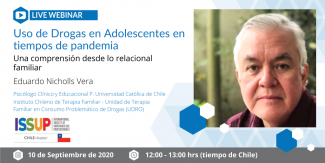
Webinar: Teen Drug Use in Pandemic Times: An Understanding from the Family Relational
ISSUP Chile invites you to participate in a webinar on 'Drug Use in Adolescents in Times of the Pandemic: An Understanding from the Family Relational' to be held Thursday, September 10, 2020, 12:00 - 13:00 hrs (Chile Time) September 10...
Webinar: Drug use among adolescents during pandemics: an understanding of family relationships
ISSUP Chile invites you to participate in a webinar on "Drug Use in Adolescents in Pandemic Times: An Understanding of the Relational Family" to be held on Thursday, September 10, 2020, from 12:00 p.m. to 1 p.m. (Chile time)
Adolescent Brain Development Reading List
Our latest collection of research, resources and publications on adolescent brain development.
Evidence Based Treatment and Prevention Courses in Academic Institutions in Pakistan Video Poster
Speaker: Salman Shahzad, PhD Institute of Clinical Psychology, University of Karachi
Report of the Pan-African Epidemiology Network on Drug Use (PAENDU) for the period 2016-2017
This is the first report of the Pan-African Epidemiology Network on Drug Use (PAENDU) and is based on available data for 2016 and 2017. The report provides information on the methods used for data collection and presents data on drug demand...
How Do You Identify Effective Clinicians? Highlight from Effectiveness Bank Alcohol Treatment Matrix cell C3
HOW DO YOU IDENTIFY EFFECTIVE CLINICIANS? They differ greatly in how well their patients do, so how do we identify effective clinicians? In cell C3 the Alcohol Treatment Matrix tackled the critical missing link in improving treatment...
Heroin/ Kudu
Heroin or KUDU (in Sri Lanka) is the main illegal substance (drug) abuse by individual more than 100000 in the country. Without sufficient treatment facilities and efficient treatment workforce, the problem can lead to to many social...
Cochrane Tobacco Addiction: Key Review Summaries
Below are two-page summaries of research carried out by the Cochrane Tobacco Addiction group. Combined pharmacotherapy and behavioural interventions for smoking cessation Electronic cigarettes for smoking cessation Reduction versus abrupt...
Digital Health: A Strategy to Maintain Health Care for People Living with Noncommunicable Diseases during COVID-19
Noncommunicable diseases (NCDs) are the main cause of death and disability worldwide. Effective management of these chronic conditions depends largely on continuous, responsive, accessible, and quality services and successful patient...
It’s Not What You Say, but How You Say It.
Motivational Interviewing & Beyond Live Webinars
A bad experience can be the best teacher. Joel Porter, Steve Rollnick, Russell Calderwood, David Rosengren & others discuss the importance of learning from experience and language in working with people in the classroom, therapy office and playing field.