
Prevention Unpacked with Dr. Zili Sloboda: Science, Translation & the Evolution of Prevention Pt.2
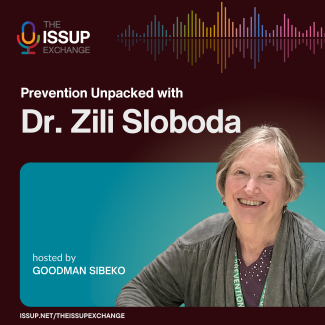
In this episode of Prevention Unpacked with Dr. Zili Sloboda, the conversation turns to how prevention science actually became a field.
Dr. Sloboda reflects on the early days, when prevention was often dismissed as vague or unmeasurable, and traces how theory, rigorous research, and cross-disciplinary work helped give the field credibility. She explains why prevention is more than information sharing, how learning and development shape what works at different ages, and why community context matters just as much as evidence.
The discussion also digs into the harder part of the work: translating research into real-world practice. From siloed funding systems to policymaker impatience for quick results, Dr. Sloboda speaks candidly about why prevention struggles to gain traction and what still needs to change to build a genuine culture of prevention.
This episode is a grounded look at where prevention science came from, what it has achieved, and why the work is far from finished.
Featured Voices
Host – A/Prof. Goodman Sibeko
ISSUP Global Scientific Advisor.
Head of Addiction Psychiatry, University of Cape Town.
LinkedIn: goodmansibeko
Twitter/X: @profgsibeko
Guest – Dr Zili Sloboda
Dr Zili Sloboda is a global leader in prevention science whose work has shaped evidence-based prevention practice worldwide.
Time Stamps
Professor Goodman Sibeko (00:00)
Welcome back to Prevention Unpacked. In our second episode, we dive into the evolution of prevention science itself, how a field once seen as abstract or peripheral becomes a cornerstone of public health and social policy. Dr. Sloboda is going to take us behind the scenes of that transformation, the theories that grounded prevention, the evidence that built its credibility, and the challenges of translating research into real world practice across diverse communities. It's a story of persistence, collaboration and scientific vision. Zili, thank you so much for being back with us. Just to get us started, in your own words, what is prevention science?
Dr Zili Sloboda (00:42)
Thank you, goodness it’s good to be back with you. There are a lot of good definitions of prevention science. In my own words, I see the focus of prevention science as being threefold to identify those factors that protect or put at risk the social, emotional, physical health of individuals, families, and even communities. How these factors operate to put at risk or to protect, and to develop and evaluate prevention to understand strategies such as interventions or policies that counter risk or that enhance protection.
Professor Goodman Sibeko (01:16)
That sounds great, Zili. Earlier on, we spoke about the fact that information sharing is not enough on its own. And already when you've discussed some of the factors that we think about, you've already given us a sense that it's a bit more complex than that. But how does it differ from general health promotion or social development?
Dr Zili Sloboda (01:35)
Well, I don't see prevention as different per se. These fields are interconnected. I think we talked a little bit about that in the earlier episode. Prevention science informs health promotion in my perspective, and social development informs prevention science and vice versa. So, yeah, that's what I think.
Professor Goodman Sibeko (01:53)
So, the three really work hand in hand. And so, I think, especially in many sorts of national arrangements of health and social services, these tend to sit in siloed spaces. So, what do you think would be the advice or the recommendation to say, we need to make sure that we combine these in view of the fact that they are integral, in fact, to prevention science?
Dr Zili Sloboda (02:16)
Structurally, I'm not the best to talk about that. But I think that there should be recognition. You can have these separate silos, but there should be that integrates them. I remember when early on under a prior governor here in Ohio, Governor Taft, his wife Hope Taft was very interested in substance use, particularly alcohol use. And she actually created a group that brought these forces together. And one of the things that we worked on initially, which I thought was very interesting, each of these organizations had their own surveys and data systems. And so, some of them were the same items, some of them were different items that she thought we should integrate them.
And we were working on that. And I thought that was really a terrific idea. So, they were separate, but they could come together and inform each other.
Professor Goodman Sibeko (03:10)
It's interesting, you we have this debate about silos all the time. Funders like silos because they like the idea that they know they're funding this specific project and they're going to have specific measurables. But in the real world, know, real deliverables for people's wellbeing doesn't, you know, doesn't occur in silos, right? And so, it's great to hear that those policymakers were interested in finding a strategy to integrate.
Dr Zili Sloboda (03:34)
Yes, but it's too bad that more aren't doing that because even you can work independently, but you can work together.
Professor Goodman Sibeko (03:41)
And, you know, taking from that, what core principles would you say define rigorous prevention science?
Dr Zili Sloboda (03:50)
Well, I see rigor in science as being the same part of the same concept, of course. I think what are important in prevention science is theory. I don't think we talk enough about theories that underlie our effective interventions. And I'm not talking about one theory. Here again, we talk about prevention as drawing from many different fields. So, the theories of human development, theories of behaviour.
Learning theory is really important, think, too, because how do you convey the message for different age groups? The use of rigorous research design is important, but they have to be realistic. I had got into a debate when I was at National Institute on Druga, because what I was saying that, you know, we were wanting to do community coalitions. You know, it's expensive and to randomize communities.
Do we need to develop different methodologies, I think? But with rigor. And then another thing is having realistic interpretation of the findings that are transferable to practice. A lot of our researchers don't think about that, to be honest with you. I think they are more cognizant of that now than they were in the past. How do you translate what you are finding so that they can be implemented and integrated practice.
Professor Goodman Sibeko (05:04)
You know, when you speak about learning and theory of behaviour and learning, to what extent do you think age-specific learning is especially important? Because when we're going to be targeting youth, we have to think in a certain way. you're targeting adults in the workplace, we have to think in a certain way.
Dr Zili Sloboda (05:19)
I think it's extremely important. As I said, think these are like the top theories that they don't rank them, they're the top 10. It's really important. And I think that's also been part of the problem sometimes in the early years. We were assuming that young people, not even in the early years, I mean, a few years ago, I heard people talking to kids and little kids, six, five, six years old about heroin or fentanyl. mean, they can't, I mean, it's ridiculous. And when a waste of money and time. So yeah, we have to be, you know, have to recognize that that age is learning how people learn and also development, how we develop, how our brains develop are important, when we do prevention work.
Professor Goodman Sibeko (06:01)
So, it's really about focus, it's about intentionality, it's about appropriateness, and it's about being theory-based. It's really, really important and relevant.
Dr Zili Sloboda (06:08)
And that gets to the whole issue of adaptation of prevention interventions to make it relevant for the communities in which we're working. Absolutely.
Professor Goodman Sibeko (06:19)
So, you started off by saying rigor and science are the same, and I agree with you. And so, the question comes to mind for me is how did the field evolve from really an early descriptive set of studies to a more theory driven evidence-based set of interventions? What was that? What does that process look like?
Dr Zili Sloboda (06:38)
In our field, interesting, okay? This is my perspective; other people may disagree. I think that the field of heart disease and cancer, we're a little bit ahead of us in substance use. And I think for instance, our approaches to community, development of community coalitions, the whole idea of working with a community really came out of the work that was done on heart disease, where they did community-based interventions, not only in behavioural, but also in terms of diet and blood pressure readings and getting engaged in the medical facilities.
Very early on, when I was at the Narcotics Register in New York, I presented at a meeting on epidemiology and I presented about the Narcotics Register and people came up to me, they said, how can you measure something like drug abuse? It doesn't make any sense. So, I think there was a lot of stigma early on that of the particular problem we were addressing that translated to the research. So, a lot of researchers didn't come into our field early on. So, I think a lot of the early work, you know, we suffered from that, I think a great deal. There was a lot of stigma, not only for the individual we're focusing on, but also it translated to us. I think there's some of that still today, but not like it was in the early days.
So, I think that what happened is as that stigma was reduced, think more and more people came from various fields to really enhance our research. And so, they brought with them their own theories, their own theoretical, their own statistical methods, their own research designs, et cetera. And I think that it just made our field much richer and helped us to move to where we are today, where I really think that we're leaders amongst all the fields in terms of our research.
Professor Goodman Sibeko (08:36)
So, I like the idea of learning from other fields. And I think we've learned, especially in the era of HIV, all of the really successful community level interventions, all of the really successful research collaborative interventions that have been put into place that have achieved some success, especially in low- and middle-income countries. And of course, as you've mentioned, ways to draw in research. I often wonder for myself, is there enough reward for research as an addiction?
So, I think maybe in reflecting about that, I'm curious to hear what key milestones would you say in research, policy or practice have really changed the landscape to really drive the field of prevention science?
Dr Zili Sloboda (09:14)
That's a really tough question. I think, again, I'm going to be talking mostly from the US perspective. I think that first of all, the creation of the National Institute on Drug Abuse in 1970s was really a big move forward in terms of recognizing that there is this field and that being part of the National Institute on Health gave it such legitimacy. So, I think that was really a key milestone. think that longitudinal studies that I mentioned were important. I think a lot of the treatment studies that were done also helped us understand more about this particular behaviour and how it impacts not only the individual's lives, but the lives of the families, for instance, and the communities.
So, I think that those studies, that research was really important. I don't know if I can pinpoint one thing or another, but I think those are changed. I think that the leadership at the National Institute of Drug Abuse was also important for prevention. I think Dr. Schuster; Bob Schuster began recognizing the importance of prevention when he was the director of the Institute and then Alan Leshner came after him.
And he was the one that helped build our prevention research portfolio and to support, he was behind the Society of Prevention Research, development of society for prevention research. So, I think, you know, there's individuals, but there's also the, as I said, accumulation of recognition that there is this field now. And I'm trying to think of other kinds of things, but I think those are the key things.
Professor Goodman Sibeko (10:46)
So, it sounds to me that it's really about the structural interventions that were put in place and the funding that was along to support them. And of course, also the backbone of empirical data, having access to that and driving further accumulation of empirical data and importantly, leadership, respected leadership that continued to garner respect through scientific rigor.
Dr Zili Sloboda (11:08)
Yes, absolutely. Very nicely put, Goodman Thank you.
Professor Goodman Sibeko (11:12)
Perfect.So, in your perspective, how have we fared really in translating the research fundings into scalable real-world prevention? Are we winning?
Dr Zili Sloboda (11:24)
We're getting there. I wish the process were moving slowly. I think, as you just pointed out, funding is extremely important. I know, for instance, my experience with policymakers is that they want to fund treatment because they can see more immediate outcomes. Whereas prevention, how do they know that something's going to change? It doesn't happen fast enough.
I think we're making a bit of progress in that area, but obviously we all feel it could move a lot faster. look at what we've done so far. We've created the societal prevention research, both in America and the United States. And now we have Asian Pacific SPR started. I know that the Latin Americans have been putting together groups. We have ISSUP, that is important. ICUDDR is important. These international groups, I think the work of the United Nations on Drugs and Crime, and the World Health Organization have really been instrumental to smoothing this translation process. But we still don't have evidence-based prevention program at the community level as much as we would like to.
I think the professionalization of the field of prevention is important. I think that started. We recognize that there is a field that has its own knowledge, that it has its own skills and competencies. I think the fact that the universities, the last 10 years, that universities are now offering courses and graduate programs in prevention science.
I think that's really important also. I always say to young people in the field, it took 2,000 years for medicine to be recognized as a profession. We're way ahead of that. We're really well on our way. As I said, think that the creation of ISSUP and ICUDDR really have an important role in moving this process forward more rapidly.
So, thank you very much for doing that.
Professor Goodman Sibeko (13:18)
So, you've highlighted some of the successes that we must pat ourselves on the back a little bit to give us some inspiration to keep going. The international organizations, but of course the funding remains a challenge. In addition to funding and perhaps to some extent some policymaker apathy in some context.
Would you have any other barriers or enablers in mind that we could talk about for successful implementation of prevention science?
Dr Zili Sloboda (13:45)
Yeah. I think that we don't have a culture of prevention, a general belief that substance use can be prevented. We need to address that somehow. Because this lack of a culture of really impacts not only the funding but also embrace at the community level.
My colleague Diana Fishbine and I wrote a paper that was published in the Clinical Child and Family Psychology Review in 2023 on building prevention service delivery system within a community. And I think having a culture of prevention would obviously support that.
And you know, well, you may not know, but in 2025, the National Academy of Sciences, Engineering Medicine in the United States put out a publication, a blueprint for a national prevention infrastructure. Yes, so we have some guidelines out there, but I don't know. I don't know how we change people's mindset.
Treatment is an easy thing. People can embrace that. prevention is a little big, it's maybe too broad. Maybe we don't have enough information. How do you, from my head, it's hard for me to translate the findings from the research to say sitting down with a group of parents and saying, know, prevention works.
What do you say to them? How can you convince them that prevention works? How can you talk to community leaders? a lot of them, you could talk about cost offsets, but you still have to have something to show them. And I think we haven't gotten there yet. I think we need to work on that. I'm not quite sure how to even start that conversation.
Professor Goodman Sibeko (15:27)
It sounds to me as if we're talking about the language that we use to communicate the science and the appropriateness with which, you know, of the strategies that we adopt. You know, tied to that, I'm curious what you think or how have prevention science adapted to the diverse cultural and social economic context. And I think that could also apply in the context of the policy makers and decision makers we have to engage with to get implementation science really accepted.
Dr Zili Sloboda (15:56)
I don't have an easy answer to that. I think I mentioned earlier that the Society for Venture Research in the United States has updated their standards of knowledge document that should come out next year. And it begins to address some of that issue, particularly cultural, the diverse cultural and socioeconomic contexts get a bunch of researchers together and they're supposed to impact policy. That's how it must be laughable, but we do try to do that. It takes time. I mean, I think what we've done with HIV, for instance, to bridge that gap between policy and practice.
I think has been amazing. It's taken a long time. I think if you live long enough, you'll basically see these things happen. I think this is something, in fact, ISSUP and ICUDDR might need to work on that. But I think we can do this. I think we can. We just need people who can speak the language, if you know what I mean.
Professor Goodman Sibeko (16:58)
So, having said that, Zili, which principles of prevention remain universal in your perspective and which ones are essential to be tailored? So, what should stay and what should be tailored for specific contexts?
Dr Zili Sloboda (17:12)
I think when in the UPC we outline nine principles of prevention, I think those are universal. The developmental focus, developmental epidemiology of the target population, transactional ecology, human motivations and change processes, having a team approach. I think that's really important, having a team approach of practitioners out there by themselves.
Ethics is important. I think that those are universals. I think there needs to be continuous feedback between our researchers and our practitioners. We don't do that enough at all. So, there are whole long list of those. And I think we need to have a particular understanding of the cultures in which we're doing prevention, family structures, instance, different roles, terminology. When you're a researcher, you learn you have to use the right terminology when you're asking questions. Language is really important. We noticed that, for instance, I used the word earlier, target population. Well, we use that here in the United States with a prevention group in a community where there was some shootings and they really did not like the word target. So, we had to be really sensitive to that and translate terminology, so it has meaning and its sort of getting back to this culture of prevention I think is important.
Professor Goodman Sibeko (18:33)
So, I think a lot of scientists probably fail at this continuous feedback and translation loop, right? And really, when we review consent forms for research, we still get quite stuck in rather formal language and terminology. So, we have some way to go there. Finally, for this episode, Zuli, if we just reflect on how far we've come, if you look back, what has, you know, most surprised or impressed you about how the field has grown.
Dr Zili Sloboda (19:00)
I think that I remember going to early meetings again where it was an international audience, international group, standing up and talking about what we were doing in the United States. And then people saying to me, well, that's good for you. That's in the United States.
And I actually did a talk on theory. I actually, somebody in the field stood up and said, well, that's American theory. That's not our theory. I said, well, what is your theory? And he didn't have an answer. And so, I think what has impressed me was that we don't do that. I haven't heard that at all in the last 10 years. So, I think that.
I'm going to cry. mean, really, it's so exciting to travel internationally to see people speaking to each other using the same terms, exploring the same issues, bringing their own experiences and feeling comfortable sharing it. So, I think that that's what really has impressed me amazingly so in the growth of the field.
The fact that we have an international society for substance use professionals. I mean, the fact that there is one and it still exists and that people come to the meetings and talk to each other. The meeting where I came and met you the first time, it was, I can't even express it. It was just amazing. And I feel like we're really making progress.
Professor Goodman Sibeko (20:22)
So, we're slowly starting to speak the same language and it's about making sure everybody understands the same language. And I think what you're saying about the openness is really wonderful as well and seeing that evolve. Zili, thank you for joining us for this episode. It's been wonderful again.
Dr Zili Sloboda (20:37)
Thank you very much, Goodman
Professor Goodman Sibeko (20:38)
That was an illuminating exploration of how prevention science has matured and how it continues to evolve in a changing world. As Dr. Sloboda reminds us, the heart of prevention is not just in generating knowledge, but in ensuring that knowledge lives in schools, families, and communities everywhere. The next episode will turn our attention to the people who make prevention happen, the workforce that drives the science forward and the systems that sustain it. Join us then.
Thank you for spending this time with us. We hope you enjoy that as much as we do. Be sure to hop on over to our website, isop.net, where you'll find information on how to sign up for free membership. Take care and catch you on the next one.
About the ISSUP Exchange
The ISSUP Exchange podcast series explores the evolution of responses to the challenges of substance use—from research and training to ethics, quality standards and evidence-based practice. We connect the dots so you can see the big picture.
Explore more episodes and join the ISSUP podcast community here>>>
About ISSUP
ISSUP is a global network that unites, connects, and shares knowledge across the substance use prevention, treatment, and recovery support workforce. Our mission is to make our members’ work as effective as possible—by providing access to training, resources, and a vibrant professional community.