
Prevention Unpacked with Dr. Zili Sloboda: Vision, Legacy & The Future of Prevention Pt.4
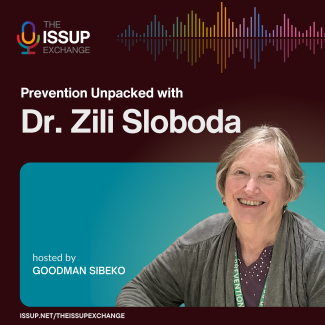
In the final episode of Prevention Unpacked with Dr. Zili Sloboda: Vision, Legacy & The Future of Prevention, the conversation looks ahead and brings the series full circle.
Drawing on decades of global experience, Dr. Zili Sloboda shares her vision for where prevention must go over the next 10 to 20 years. She reflects on what it would mean for prevention to be fully recognised as a profession, embedded across health, education, and social systems, and guided by a true culture of prevention rather than short-term solutions.
The episode explores emerging frontiers shaping the future of the field, including digital environments, climate change, misinformation, neuroscience, and equity. Dr. Sloboda speaks candidly about the need for stronger integration between research and practice, new training pathways, and leadership grounded in respect, listening, and collaboration.
As the conversation turns to legacy, Dr. Sloboda reflects on the moments that have mattered most in her career, the role of global networks such as ISSUP and ICUDDR, and what gives her hope for the next generation of prevention professionals. The series closes with a powerful reminder that prevention is not a static outcome, but a living, evolving process carried forward by people, partnerships, and shared purpose.
Featured Voices
Host – A/Prof. Goodman Sibeko
ISSUP Global Scientific Advisor.
Head of Addiction Psychiatry, University of Cape Town.
LinkedIn: goodmansibeko
Twitter/X: @profgsibeko
Guest – Dr Zili Sloboda
Dr Zili Sloboda is a global leader in prevention science whose work has shaped evidence-based prevention practice worldwide.
Time Stamps
Professor Goodman Sibeko (00:00)
Welcome to the fourth and final episode of Prevention Unpacked, the journey and vision of Zili Sloboda. In this concluding conversation, we look towards the horizon. Dr. Sloboda shares her vision for the next generation of prevention, how the field can respond to the new social and technological realities, deepen equity and inclusion, and continue to grow as a global movement. We reflect on her remarkable career, her leadership philosophy, and what she hopes her legacy will mean for those who follow. Zili, thank you so much for joining us once again. When you look 10 to 20 years ahead, how do you imagine the field of prevention evolving?
Dr Zili Sloboda (00:40)
Hi, Goodman. Thanks again for this opportunity. That's a challenging question, and I like it. When I look ahead and imagine how the field would be evolved, first of all, that there is a profession that's recognised that young people want to be prevention professionals. That would be really exciting. Can imagine somebody saying, what do you want to be when you grow up? And they say they want to be a prevention professional. That would really be amazing to think that I like to see prevention. an earlier conversation, we talked about a culture of prevention, I would love to see a culture of prevention evolve. And throughout the world, that people would be not focusing on immediate solutions, but they would be a long term so that what we learned from prevention would be incorporated in programs and schools and family support programs in the community at large. I think what we learned from prevention and substance use really applied to prevention of many other kinds of challenging behaviours that have negative outcomes.
So that's what I would love to see, that there is a recognition of the field of prevention that people, universities offer degrees in prevention. One other thing I'd like to see is when people are trained in prevention, that there are two tracks for prevention. So, you can go into a research track or a practice track. The point is that you'll be trained together because that's that disconnect between research, even though it's getting smaller, between research and practice, that it's getting smaller, but I would like to eliminate it, that people in practice would want to work with prevention researchers.
Professor Goodman Sibeko (02:17)
You know, in a previous episode, Zili, we spoke about the siloing and how in many ways it's harmful, but in some ways can be exploited. And now we've really spoken about as well embedding the capacity building, training and competence building of practitioners and making sure that folks, you know, even if they're going to follow research or practice, have exposure to the same science and that they, you know, the training track is aligned. And of course, having those competency-oriented degrees in prevention. Beyond that, is there any other idea that you might have for how prevention can really be truly integrated into the health and social systems globally?
Dr Zili Sloboda (02:54)
I think that's a challenging question, of course. I think for instance, preventive healthcare, people understand that. They don't practice it necessarily, and that's the unfortunate thing. I think once we can get acknowledgement of that, how do we integrate what we've learned in prevention into that system, that's clear, I think would be very helpful. I think talking to our colleagues in health and social systems, having discussions with them, I think would really be helpful. I think not only at the community level, but as you point out, globally, if we can do that.
I think that's the only way it can be done. think the concepts are, the concept of prevention I think is embraced by the health and social systems, but they think in terms of health promotion more than preventive certain behaviours. It's a little bit different. So, we want to push them, nudge them along the way to really see that you want to go beyond that. You really want to go deeper. And so, we need to talk more with our colleagues and find leaders, you know, leaders in those fields who would help us communicate the need for the integration to their colleagues. And they can speak in their language if you understand what I mean.
Professor Goodman Sibeko (04:03)
So, it really comes back from what I'm hearing Zili, to that culture of prevention. feel like future discussions and interventions that we put together for the ISSUP community could really interrogate what a culture of prevention looks like, you know, from the ground up, from the policy level, at the implementation level, at the community, at the practitioner level, from the non-specialised to the specialised. So, it's really something that I think we could grapple with going forward in the future.
Dr Zili Sloboda (04:29)
Absolutely.
Professor Goodman Sibeko (04:30)
You know, we've spoken a little bit in the other episodes about some of the digital innovations and you've said, you know, you are very excited to see innovation coming in from researchers and from practitioners. Are there specific frontiers that you feel prevention science should explore and exploit, especially being responsive to the digital environment, to climate change, to neuroscience, to AI and equity?
Dr Zili Sloboda (04:53)
I think one of the challenges I'd like to focus on is climate change, because it's happening. It's happening everywhere, and it impacts communities, communities where they are, but also, it's forcing communities to move, so they’re moving into other, that may be moving into other cultures, if you will. We see that even just in the United States how climate change has been moving people into new communities. So, I think that we haven't talked about that. just superficially, number of our young, particularly our younger prevention professionals have mentioned that that's become a challenge for them.
So, I think that's one area. I think we're the digital environments. I think is also important particularly but also I think that the information that There's so much erroneous information That people have particularly young people have I don't know how to how we address that that is definitely a challenge that we need to counter in some way the whole also in line with that is just social media in general.
We sort of touch on that in UPC, but I think we need to do more in how to help prevention professionals be effective in that arena. So yeah, I think those are some of the challenges in the future.
Professor Goodman Sibeko (06:10)
One reflection we discussed at length in Lisbon a couple of years ago was the fact that when we talk about screening, brief intervention, referral to treatment, we don't talk enough about the fact that we are dealing with an industry that continues to innovate in terms of exposure. And we don't account enough when we talk about brief interventions for those elements. So, when you brought in the vast amounts of erroneous information, also being driven by AI in some ways and social media, those are really important elements to think about.
Dr Zili Sloboda (06:39)
Yeah, absolutely.
Professor Goodman Sibeko (06:40)
Zili in terms of leadership and influence, again, we've touched on this in previous episodes, but just for those who are just encountering us now in this episode and to stimulate their desire to go back to episode one to learn more, what philosophies would you say have guided your leadership approach in global collaborations and organisations?
Dr Zili Sloboda 07:00
One is respect. I think that's really important. Listening that's in line with respect is don't talk so much, listen, make notes. We learn a lot from each other. I think that's important. Even within our own communities, we learn a lot from other people. Particularly in prevention, it's such a broad area.
There's no one vaccine. There's no one medication. It's very comprehensive. And it's changing. Our language changes, our behaviours. Think about the impact of COVID. You go to conferences, and you see people, and you shake their hand, right? But during COVID, we couldn't do that. So how do you, wearing a mask? It's a, you know, we have to recognise that there are changes and we have to be ready for those. And we need to just be open to that. I think that's the most important thing is openness. Yeah, and debate and being able to debate stuff. You're wrong. I'm wrong. I didn't realise that. You know, being able to use those words, I think are really healthy.
Professor Goodman Sibeko (07:58)
Yeah, so genuine, well-meaning, collegiate debate.
Dr Zili Sloboda (08:02)
Being collegial in the best sense of the word, right? Exactly.
Professor Goodman Sibeko (08:05)
We've had lot of discussions on the African continent about the incorporation of traditional leadership. And one of the complaints that they make is that they don't see traditional structures being respected in how the West designs and implements community level implementation, prevention and treatment strategies. So indeed, you know, it's really about respect, listening, making notes and trying to, of course, still impart the importance of evidence in order to sell a prevention strategy.
Dr Zili Sloboda (08:33)
Right. And I think I want to underscore here that our researchers should be working with the practitioners so that we can't do randomised control trials all the time. We've got to think about other methodologies that are strong, that are easy to implement at the community level. And I think, it was happening for a while, but I think somehow COVID, really set us back a bit. I think, again, I think ISSUP has a good role to play in that regard. But I think that's also very important. We really need to know that what we're doing, not only for ourselves, but we also for our communities that we work in, we've able to say to communities, we're really making a difference. More kids are graduating from school, more or the fewer overdoses coming to the emergency room amongst kids, young people. I mean, we need to be able to show the community that we're having an impact.
Professor Goodman Sibeko (09:32)
So, I mean, you've spoken about the future leaders now, you know, in that response. So how, in your view, can current and future leaders really foster a more inclusive interdisciplinary and equitable prevention field?
Dr Zili Sloboda (09:45)
You know, I'm thinking about being a young person today in this field. I'm sure that right now a lot of them feel very isolated. So, it's kind of hard. I think, you know, we talked about the graduate school experience, keeping in touch. And I think it's easier these days than it was when I was younger in the field to stay in touch with, to form a network that you can, you know, tap into online. I've noticed recently, this is past two weeks, I've been seeing some notices from some different people who've gone through our training, who shared some of their experiences of some of their challenges. So, staying in touch, think, would be really important if we can, you know, these people are doing them, they're not, what am going say? It's not institutionalised. I think we need to institutionalise, that's the word I wanted to use, institutionalise this kind of networking. I don't know how we do that, but, I think this way, new ideas, new publications of journal articles perhaps can be shared and maybe have a forum for discussion about some significant papers that come out. I think would be really helpful. I think we have the tools today to really be able to build this, cadre of people who share the same kinds of challenges, but they can talk to each other. They feel free that they can share with each other. So, I would, you know, I would, that's the advice I would have is we have to form these networks and to support, to support each other. It's not easy being out there on your own.
Professor Goodman Sibeko (11:10)
You know, Zili, how I first summarise what you've said, its connectedness, right? So, we're talking about this current social media heavy time that we live in where people are connected but not connected. And when you say institutionalise, hear give the profession a home. And when you say, you know, talking about new ideas and making sure there's spaces to explore them, it's given the ideas a home. So, the theme all around is connectedness and home. So, give these people a space and a sense of belonging to the field.
Dr Zili Sloboda (11:40)
Yes, exactly. I think that's very well put, Goodman. Thank you.
Professor Goodman Sibeko (11:44)
Awesome. given this sense of isolation and the sense of, you know, a lot of folks are still finding out about, you know, resources like UPC, UTC, that they can belong to organisations like ISSUP What advice would you give to early and mid-career prevention professionals about building influence and resilience, you know, functioning in this very challenging space?
Dr Zili Sloboda (12:08)
Wow. I know how hard it is and it takes time. I think you have patience. I think prevention practitioners know that already. Look for small wins. Share them with your colleagues. I think that's good, talking to each other. That's why think the networking is really important. As I said, I felt isolated. you know, earlier, my earlier discussions, and how I was kind of an oddball in some situations, because I didn't have the support and understanding that was necessary.
I think that's all I can say. Having influence, I think, is important. And building that is with small wins. Knowing your communities, knowing what they think is important, understanding that talking to people, connecting with people. And I know it's hard. think teaming up, for instance, we talked earlier about prevention and treatment professionals teaming up, supporting each other. They're not opposing forces. They really aren't. They work together. And I don't think that's, I think that's, I hear often, you know, when harm reduction began to become a force in the United States, prevention people were really scared that this meant that all funding was going to disappear for prevention. But we're all on the team. We don't talk about the natural history of substance use disorder. We talk about the natural history of cancer. We talk about the natural history of other diseases, but we don't talk about natural history of substance use from that onset through to recovery, post-recovery, their services are needed. That's why we need comprehensive services in a community that work together to address this issue. So that's just some thoughts out there. don't know if that answers your question.
Professor Goodman Sibeko (14:01)
It does, Zili. And so again, for me, it sounds like you're saying we must team up, we must identify synergies. Let's not work against each other. Let's pull together. And you know, one piece I would add to that is be a trustworthy partner, be a trustworthy collaborator, be a genuine partner. I think, you spoke earlier about caring about the work that we do, caring about the workforce, but we should also be good people and care about each other and be trustworthy and when we're at the table, be so meaningfully and with commitment.
Dr Zili Sloboda (14:32)
Yeah, we're all in this to address the same issue. And, you know, for instance, in the epidemiologic studies, we're showing that the most at-risk group are children of substance users. So why don't we have parenting programs, for instance, in treatment? We have lots of great evidence-based parenting program in treatment, and a lot of people in treatment are parents, and they're going to be leaving treatment, and they're going to have to take on the parenting role? How can we help them, so they help their children? So, we need those kinds of conversations.
Professor Goodman Sibeko (15:05)
Zili, we've, you know, a lot of us know your history so well and we know your accolades and your achievements so well and there's so many of them. When you personally reflect on your career, what moments or achievements really feel most meaningful to you?
Dr Zili Sloboda (15:19)
Good question, hard question to answer. I must say the creation of ISSUP and ICUDDR probably were the crowning moments because we were working towards that for years. So, I think that would be really those would be really significant moments for me. The fact that we were able to build applied prevention sciences international and be able to get out there with information. I might want to just make a plug here. Springer is going to be coming out. We have a book that's coming out next year for prevention science for practitioners applied to practice. Hopefully it'll be coming out 2026. And I think that will be also for me, probably the last book I'm going to be doing. And it's been a lot of work. Yeah, would be, that coming out will be summarising everything I've been working towards.
Professor Goodman Sibeko (16:10)
That sounds great. I'm so glad that you listed ISSUP as a highlight in terms of other things that you've been part of that you've achieved and we appreciate that. Sort of to take that further, where would you like, what would you like to see ISSUP, and our partners prioritise to advance prevention globally? I mean, we've already spoken in the other episodes about the really important role ISSUP plays in supporting the network and supporting capacity building and creating spaces for engagement. What else would you like to see ISSUP achieve?
Dr Zili Sloboda (16:41)
I think ISSUP is already working towards, for instance, the professionalisation, credentialing, et cetera. I think that, and I'm not sure if ISSUP is still doing this, by the way. When we originally designed it, we had advisors for prevention and treatment to update the science, et cetera. And I think that is important.
I don't know how you work on this culture of prevention. I think that gets sort of into the political realm and I'm not sure who you partner with to do that. I think certainly the United Nations seems to be the obvious first connection and you're already working with that. So, I think you're well on your way to doing that. So that's what I would say is how can we get this culture of prevention instilled, recognised by governments of different countries. I think if we do that, that would be the prevention practitioners within those countries can help to bring it to the community level, hopefully.
Professor Goodman Sibeko (17:38)
I think what we're really excited about, Zili, is that we've now got a scientific council that supports ISSUP in terms of making sure that the science is strong. And on that, we have some really good prevention representation as well. And of course, we're excited to continue to have you to lean on as well. So, we appreciate you. In closing, Zili, as the final question of the series, before I asked you what keeps you up at night in the other episode. So, this time I want to ask you.
What gives you hope for the future of prevention?
Dr Zili Sloboda (18:08)
I think all these events that have taken place over the last, certainly the last 10 years, 10, 15 years with the creation of the international groups, ISSUP and ICUDDR the fact that there is these growing societies for prevention research, which includes practice, by the way, I want to emphasise that, in Europe as well as the United States, of course, now, and Asia Pacific, bringing prevention researchers together with prevention practitioners. The fact that we're talking about professionalisation of the field, these all give me a great deal of hope for the future. It's amazing to see it happen.
Professor Goodman Sibeko (18:44)
Zili, what gives me hope is the continued accessibility of experts such as yourself to us to continue sharing your knowledge and expertise. So, we really appreciate you. And I just want to say thank you from ISSUP for joining us for the series.
Dr Zili Sloboda (18:57)
Well, thank you for this opportunity. It really gave it a reason to think about all the last 50 years.
Professor Goodman Sibeko (19:06)
As we close this series, we extend our heartfelt thanks to Dr. Zili Sloboda for her wisdom, generosity, and her lifelong commitment to building a world where prevention is both science and practice, evidence and empathy. From her journey, we're reminded that prevention is not a static goal, but a living process, one that evolves with each generation of thinkers and doers to carry it forward. From all of us at ISSUP, thank you for listening to Prevention Unpacked. May these conversations inspire you to keep learning, leading and innovating in the science of prevention.
Thank you for spending this time with us. We hope you enjoy that as much as we do. Be sure to hop on over to our website, isop.net, where you'll find information on how to sign up for free membership. Take care and catch you on the next one.
About the ISSUP Exchange
The ISSUP Exchange podcast series explores the evolution of responses to the challenges of substance use from research and training to ethics, quality standards and evidence-based practice. We connect the dots so you can see the big picture.
Explore more episodes and join the ISSUP podcast community here>>>
About ISSUP
ISSUP is a global network that unites, connects, and shares knowledge across the substance use prevention, treatment, and recovery support workforce. Our mission is to make our members’ work as effective as possible—by providing access to training, resources, and a vibrant professional community.