

Search
 Treatment
The range of medical, psychological, and social services designed to help individuals reduce or stop substance use and manage substance use disorders. Treatment may include assessment, counselling and behavioural therapies, medication-assisted treatment, withdrawal management, and support for co-occurring mental or physical health conditions. Effective treatment is typically person-centred and evidence-informed, and may be provided in outpatient, community, or residential settings. Treatment aims to improve health and functioning, reduce substance-related harms, and support individuals in moving toward recovery and long-term wellbeing.



Effectiveness Bank Analysis: Therapist Empathy More Closely Related to Outcomes than Therapy Type
The more therapists empathically communicate their understanding of and compassion for clients, the better the outcomes - a relationship stronger than between outcomes and the type of therapy. Recommendations in this review commissioned by...
Addiction Journal Podcast - December 2018
The Journal of Addiction has published its latest podcast describing the highlights from the December issue of Addiction.
In addition to describing the key features that are presented in the journal, the podcast includes a selection of...

Effects of Long‐Term Alcohol Drinking on the Dopamine D2 Receptor: Gene Expression and Heteroreceptor Complexes in the Striatum in Rats
Abstract
Background
Reduced dopamine D2 receptor (D2R) ligand binding has repeatedly been demonstrated in the striatum of humans with alcohol use disorder (AUD). The attenuated D2R binding has been suggested to reflect a reduced D2R...
Effectiveness Bank Analysis: Patients Who Expect the Best Are More Likely to Get It
How much a patient expects treatment will help is not just an empty prediction but a force in making treatment help, is the strong possibility raised by a review commissioned by an American Psychological Association task force. The...
Research Shows Relationship Between Alcohol, Drugs and Violence
It is already expected that alcohol and other drugs lead the person to a path of violence, but recently this was proven through research by a group from the School of Medicine of the University of São Paulo (USP). They published the results...
Research Explicit Relationship between Alcohol, Drugs and Violence
It is already expected that alcohol and other drugs lead the person to the path of violence, but recently this was proven through a study of the group of the University of São Paulo Medical School (USP). They published results of a survey...
Effectiveness Bank Analysis: Authoritative Recommendations on Improving Group Therapy Outcomes
How can we make the most of group therapy, a common treatment/support format in substance use treatment? Recommendations do not get more authoritative than those advanced in this review commissioned by the American Psychological Association...
Sustained Opioid Antagonism Modulates Striatal Sensitivity to Baby Schema in Opioid Use Disorder
Highlights
- First fMRI study on the effects of naltrexone on social motivation in opioid-addicted patients.
- Extended release naltrexone modulates brain response to the level of cuteness in baby portraits.
- Reduction in craving for...
Duration of Therapy – Does It Matter?
Highlights
- Planned duration of therapy not associated with outcome in use of alcohol
- Actual attended sessions of therapy not associated with outcome in use of alcohol
- Frequency of research assessments significantly associated with use...
The Global Drug Survey for 2019
The Global Drug Survey for 2019 (GDS2019) was launched on the 29th of October.
European Action for Employment in Recovery
A new European project has been developed to provide individuals in recovery from substance use in Scotland the opportunity to a part in a work and learning experience in another European country.
The European Action for Employment in...
Self‐Medication with Alcohol or Drugs for Mood and Anxiety Disorders
Substance use is one way that people deal with the difficult symptoms present in mood and anxiety disorders. As people become more reliant on the effects of the substances to relieve distress the use can develop into dependence. Self‐medica...
Comorbid Opioid Use is Undertreated among Forensic Patients with Schizophrenia
Abstract
Background
Substance use disorders are associated with poorer clinical outcomes in patients with schizophrenia. There is no specific treatment for amphetamine or cannabis use disorder, but methadone and buprenorphine are used as...
Older Adults in Treatment for Alcohol Use Disorders: Service Utilisation, Patient Characteristics and Treatment Outcomes
Abstract
Background
In western countries demographic changes are leading to an ageing society. Consequently, the number of older adults with alcohol use disorders (AUDs) will rise and the demand of treatment is likely to increase. However...
A great opportunity for professional treatment and prevention of substance use.
Work in the field of substance abuse is, at the same time, a great challenge and a great opportunity to grow, help people and make a difference in the world. The scholarship program Hubert h. Humphrey, is a great opportunity for...
Benzodiazepine Use Is High while Use Disorder Rates Are Low
Benzodiazepines, such as sedatives and sleeping aids, are a widely prescribed group of medicines designed for short-term treatment. Although most people manage benzodiazepines as prescribed, some individuals misuse the drugs and can develop...
The Great Opportunity for Substance Use Prevention and Treatment Professionals
To work in the substance abuse field, is at the same time, the big challenge and a great opportunity for growing, helping people and making a difference in the world.
The Hubert h. Humphrey Fellowship Program is a great opportunity for...
Mindfulness for Chronic Pain and Prescription Opioid Misuse
Opioid medication for chronic pain can be an effective treatment. Most patients take the medication as prescribed, however some individuals can become addicted to the drug, leading to opioid misuse. Prescription opioid misuse is a...
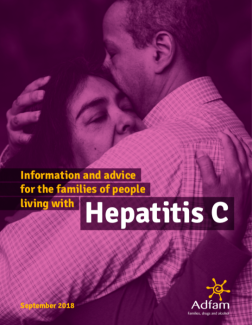
Information and Advice for the Families of People Living with Hepatitis C
Hepatitis C is a highly infectious blood-borne virus that affects the cells of the liver causing inflammation. Although many people with the virus may have no symptoms at all people can experience jaundice, depression, fatigue, skin...
Evaluation of Amphetamine-Related Hospitalizations and Associated Clinical Outcomes and Costs in the United States
Key Points
Question: What are the current trends in frequency and costs of amphetamine-related hospitalizations in the United States?
Findings: In this cross-sectional study of approximately 1.3 million amphetamine-related US...