

Search
 Populations
Distinct groups of people within a society who share certain characteristics such as age, gender, geographic location, socioeconomic status, cultural background, or exposure to particular risk factors that may influence patterns of substance use, vulnerability to substance use disorders, and access to services. In the context of substance use systems, identifying and understanding different populations helps guide the design of prevention, treatment, recovery, and policy responses that are appropriate, equitable, and responsive to specific needs. Examples may include youth, women, people experiencing homelessness, individuals in the criminal justice system, or communities affected by specific social or economic conditions.


Prevention, Day 2, Track 1, 11:00-12:30
Presented as part of the Uniting the global community to face the challenge of addiction event, in-person on 13th May, 2022
NRC Studies on Stigma and Family, Day 1, Track 2, 15:30-17:00
Presented as part of the Uniting the global community to face the challenge of addiction event, in-person on 12th May,2022
NRC Research Studies, Day 1, Track 2, 11:00 - 12:30
Presented as part of the Uniting the global community to face the challenge of addiction event, in-person on 12th May, 2022
Opening Ceremony and Keynote Speaker - Professor Michael Farrell, Day 1, Track 1, 09:00 - 10:30
Presented as part of the Uniting the global community to face the challenge of addiction event, in-person on 12th May 2022.
Opening Ceremony and Keynote Speaker - Professor Michael Farrell
Responding to Global Stimulant Use: Challenges and Opportunities
Association of Obsessive-Compulsive Disorder and Obsessive-Compulsive Symptoms With Substance Misuse in 2 Longitudinal Cohorts in Sweden
Abstract
Importance Neurobiological models have postulated shared neural mechanisms between obsessive-compulsive disorder (OCD) and substance use disorders, but results from clinical and epidemiological studies are conflicting or even...
Addressing drug challenges in humanitarian and health crises
ISSUP Mexico held a discussion on Wednesday, June 29 at 11:00 a.m. Mexico City time, in commemoration of the International Day to Combat Drug Abuse and Illicit Trafficking.
June 29, 2022 11:00 am - 12:30 pm (Mexico time)
Moderator:
Dr...
Mental Health and Related Factors Among Undergraduate Students During SARS-CoV-2 Pandemic: A Cross-Sectional Study
Background: Mental health problems among undergraduates are a significant public health concern. Most studies exploring mental health in this population during the pandemic have been conducted in high-income countries. Fewer studies come...
Four-year health trajectories of children prenatally exposed to cocaine and/or cannabis. A retrospective, cohort study in La Pampa, Argentina
ABSTRACT
Cocaine and/or cannabis use during pregnancy is a growing problem of relevance for global public health. Exposed children may have a wide range of perinatal complications, but there is little knowledge on their course.
Objective...
Adolescent behaviors during the preventive and mandatory social isolation in Argentina in 2020
ABSTRACT
Introduction. In March 2020, Argentina established a preventive and mandatory social isolation policy (ASPO, for its acronym in Spanish) due to the COVID-19 pandemic.
Objective. To explore the behaviors and habits of the...
Adolescent behaviors during social, preventive and mandatory isolation in Argentina in 2020
SUMMARY
Introduction. In March 2020, social, preventive and mandatory isolation (ASPO) began in Argentina due to the COVID-19 pandemic.
Objective. To explore the behaviors and habits of the adolescent population during ASPO and their...
World “NO Tobacco Day”, Youth of Allied Health Sciences Presented A Variety Of Projects At The University Of Lahore
On May 31, 2022, the world celebrates “NO Tobacco Day”. To honor this day, many events take place every year. The effects of smoking tobacco and the millions of deaths that take place, as a result, are widely known. Cancer, stroke...

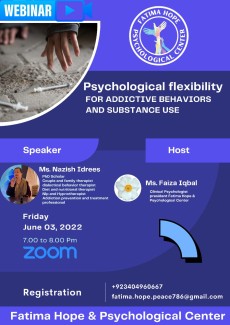
Webinar on psychological flexibility for addictive behaviours
On June 3 Friday evening, 2022, a webinar was held to educate youth, students and professionals about a new clinical construct called Psychological Flexibility. The importance of this ability was elaborated in the context of managing...
Association Between Smoking History and Overall Survival in Patients Receiving Pembrolizumab for First-Line Treatment of Advanced Non–Small Cell Lung Cancer
Abstract
Importance There is a need to tailor treatments to patients who are most likely to derive the greatest benefit from them to improve patient outcomes and enhance cost-effectiveness of cancer therapies.
Objective To compare...
War - psychological skills for surviving and coping with traumatic events: Helping people who have become refugees or internally displaced
ISSUP Ukraine and ITTC-Ukraine welcome you to a joint initiative dedicated to the ongoing war and the events that resulted from Russian's attack on Ukraine.
Patient perspectives on depot buprenorphine treatment for opioid addiction – a qualitative interview study
Background
Recently developed buprenorphine depot injections have the potential to reduce risk for diversion and misuse, and to increase adherence with fewer visits for supervised intake. However, it is unclear how patients perceive this...
A qualitative study exploring how young people perceive and experience substance use services in British Columbia, Canada
Background
Substance use among youth (ages 12–24) is troublesome given the increasing risk of harms associated. Even more so, substance use services are largely under utilised among youth, most only accessing support when in crisis. Few...
Real-world effectiveness of pharmacological treatments of opioid use disorder in a national cohort
Abstract
Aim
To investigate the real-world effectiveness of pharmacological treatments (buprenorphine, methadone) of opioid use disorder (OUD).
Design
A nation-wide, register-based cohort study.
Setting
Sweden.
Participants
All...
UNODC promotes the dialogue on drug demand reduction across Central Asia at ISSUP Abu Dhabi 2022 Conference
Within the framework of UNODC global project GLOJ71”Treating drug dependence and its health consequences: Treatnet II” UNODC ROCA in collaboration with Prevention, Treatment and Rehabilitation Section (PTRS) HQ supported participation of 19...
New Psychoactive Substances (NPS): Synthetic Hallucinogens/ Synthetic Depressants
The Second Webinar was hosted by ISSUP Pakistan and focus on Synthetic Hallucinogens/ Synthetic Depressants.
War - psychological skills for surviving and coping with traumatic events: first aid for children
ISSUP Ukraine and ITTC-Ukraine welcome you to a joint initiative dedicated to the ongoing war and the horrific events that resulted from Russian's attack on Ukraine.