

Search
 Populations
Distinct groups of people within a society who share certain characteristics such as age, gender, geographic location, socioeconomic status, cultural background, or exposure to particular risk factors that may influence patterns of substance use, vulnerability to substance use disorders, and access to services. In the context of substance use systems, identifying and understanding different populations helps guide the design of prevention, treatment, recovery, and policy responses that are appropriate, equitable, and responsive to specific needs. Examples may include youth, women, people experiencing homelessness, individuals in the criminal justice system, or communities affected by specific social or economic conditions.



Like Sugar for Adults: The Effect of Non-Dependent Parental Drinking on Children & Families
This study set out to explore the effect of non-dependent parental drinking on children, making a direct link between parental drinking habits and the attitudes, behaviours and impacts reported by their children.
It explores the effect of...

Blood Alcohol Concentration-Related Lower Performance in Immediate Visual Memory and Working Memory in Adolescent Binge Drinkers
The binge drinking (BD) pattern of alcohol consumption is prevalent during adolescence, a period characterized by critical changes to the structural and functional development of brain areas related with memory and cognition. There is...
Direct Marketing Promotion and Electronic Cigarette Use among US Adults
Abstract
Introduction
The use of electronic cigarettes (e-cigarettes) among US adults has increased since 2007. The objective of this study was to investigate the prevalence of direct marketing promotion of e-cigarettes and its...
Associations of Perceived Interparental Relationship, Family Harmony and Family Happiness with Smoking Intention in Never-Smoking Chinese Children and Adolescents
Abstract
Objective: To examine the associations of perceived interparental relationship, family harmony and family happiness with smoking intention in never-smoking Chinese children and adolescents in Hong Kong.
Design, settings and...
World Mental Health Day 2017
Dhaka: World Mental Health Day
Speakers at a press conference at Dhaka Ahsania Mission (DAM) called for taking comprehensive steps for preventing the use of drugs among women, saying that drug addiction affects women's mental health as...

Childhood Matters: Alcohol and Drug Problems from a Child Rights Perspective
Millions of children globally suffer as a consequence of the use of intoxicating substances like alcohol and illicit drugs. This is an important, but too often neglected, child rights issue. The new FORUT publication “Childhood matters”...

Patterns of Polydrug Use among Pregnant Substance Abusers
Abstract
Aim:
Studies of drug use during pregnancy have generally focused on individual substances or specific combinations of drugs. The aim of this article is to increase our knowledge about polydrug use and pregnancy in a Nordic...
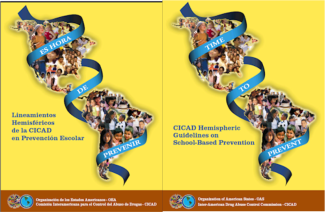
CICAD Hemispheric Guidelines on School-Based Prevention
As developed by CICAD's Expert Group on Demand Reduction and approved by the Commission in 2004, these guidelines speak to strategies to conduct research, create educational materials, train teachers, and carry out and evaluate prevention...
National Academy of Medicine Releases New Special Publication Guide
September 21, 2017
Halting the opioid epidemic requires aggressive action across multiple dimensions, including informed, active, and determined front-line leadership from health clinicians working in every setting throughout the nation...
Chemsex: An Emergent Phenomenon
Chemsex is the term given to the intentional use of psychoactive drugs in order to maintain sexual relations between men who have sex with men (MSM), usually for long periods of time and with multiple partners. This phenomenon has also been...
Specification of Change Mechanisms in Pregnant Smokers for Malleable Target Identification
Maternal smoking during pregnancy (MSDP) continues to be a leading modifiable risk factor for perinatal complications and a range of neurodevelopmental and cardio-metabolic outcomes across the lifespan. Despite 40 years of intervention...
Syndemic Risk Classes and Substance Use Problems among Adults in High-Risk Urban Areas
Substance use problems tend to co-occur with risk factors that are especially prevalent in urban communities with high rates of poverty. The present study draws on Syndemics Theory to understand profiles of risk and resilience and their...
Methamphetamine Increases Risk of Stroke, Study Finds
The use of methamphetamine, or what is commonly known as ‘speed’, ‘ice’, or ‘meth’, correlates with an increased risk of stroke among young people, according to new research published in the Journal of Neurology Neurosurgery & Psychiatry.
...New National Alcohol Policy launched by Minster of Health
The new National Alcohol Policy for Malawi has been in the making since 2008, a process originally initiated by a group of NGOs. On the 18th of August almost ten years later the Minister of Health, Atupele Muluzi, could launch the final...

How States Are Tackling the Opioid Crisis
ABSTRACT
Objectives:
We used data from the 2015 National Association of State Alcohol and Drug Abuse Directors Web-based questionnaire and other sources to demonstrate the range and scope of state initiatives being used to deal with the...
The Use of Solvent Inhalants among “Street Children” in Mexico
Abstract:
Introduction: The use of solvent inhalants has been documented in Mexico since the 1970s. Nevertheless, very little is known about the distribution and use dynamics among “street children”. Few have ventured to study this issue...
Opioid Use and Opioid Use Disorder in Pregnancy
ABSTRACT
Opioid use in pregnancy has escalated dramatically in recent years, paralleling the epidemic observed in the general population. To combat the opioid epidemic, all health care providers need to take an active role. Pregnancy...
Teachers and Coaches in Adolescent Social Networks Are Associated with Healthier Self-Concept and Decreased Substance Use
ABSTRACT
BACKGROUND
Poor academic (eg. “I am a bad student”) and behavioral (eg. “I am a troublemaker”) self-concepts are strongly linked to adolescent substance use. Social networks likely influence self-concept. However, little is...
Substance Use among Transgender Students in California Public Middle and High Schools
ABSTRACT
BACKGROUND
Transgender adolescents face tremendous social stress in families and schools, which often leads to behavioral health disparities. This study assessed whether rates of substance use were higher among transgender...
Socioeconomic Position and Adolescent Drinking: What's the Link?
To what extent does socioeconomic position affect adolescent drinking behaviours?
A new article recently published in the academic journal BMC Public Health addresses this question in the context of six different European countries among...