


Search
Theories and Science
Application of scientific theories and research to understand and prevent substance use, including prevention science.


Universal Prevention, Day 3, Track 1, 13:30-15:00
Presented as part of the Uniting the global community to face the challenge of addiction event, in-person on 14th May, 2022
Educational Prevention, Day 3, Track 1, 09:00-10:30
Presented as part of the Uniting the global community to face the challenge of addiction event, in-person on 14th May, 2022
Treatment, Day 1, Track 3, 11:00-12:30
Presented as part of the Uniting the global community to face the challenge of addiction event, in-person on 12th May,2022
CGU's Media Prevention, Day 1, Track 1, 15:30 - 17:00
Presented as part of the Uniting the global community to face the challenge of addiction event, in-person on 12th May, 2022.
Cognitive Behavior Therapy for Substance Use Disorders: From Theory to Practice
Cognitive Behavioral Therapy (CBT) has been found to be effective for treating a variety of Substance Use Disorders (SUDs). This webinar will review the CBT model of substance use, as well as practical treatment strategies and tools in...
Toward a Theory of Motivational Interviewing
Abstract
The widely-disseminated clinical method of motivational interviewing (MI) arose through a convergence of science and practice. Beyond a large base of clinical trials, advances have been made toward “looking under the hood” of MI...
Motivational Interviewing: Reading List
Motivational interviewing is a counselling approach that aims to harness an individual’s motivation to change and promote autonomy in decision making.

Anomalies in global network connectivity associated with early recovery from alcohol dependence: A network transcranial magnetic stimulation and electroencephalography study
Abstract
Although previous research in alcohol dependent populations identified alterations within local structures of the addiction ‘reward’ circuitry, there is limited research into global features of this network, especially in early...
Overcoming the pains of recovery: The management of negative recovery capital during addiction recovery pathways
Abstract:
Pains experienced as a result of negative recovery capital are often thought to stimulate motivations for positive behavioural change, usually through a ‘rock bottom’ type moment. Whilst recovery capital and barriers to recovery...

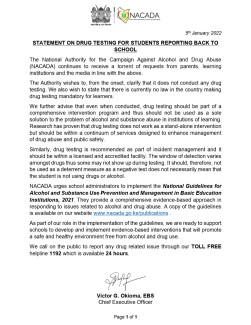
Is students’ drug testing the solution to school riots?
The torching of schools by students has become a regular occurrence in Kenya over the past two decades. This has resulted to destruction of property, disruption of the school calendar and unfortunately loss of innocent lives. Last year...
Defining and implementing evidence-based practice: Reading list
What do we mean by evidence? This ISSUP Reading List has useful resources to help you learn more about evidence-based practice.

Normalisation Process Theory
Theories are important tools in the health and social science world. However, it is important to consider how they are formed and how they inform everyday practice.
In this paper, the authors discuss the Normalisation Process Theory...

Professionalization and Strengthening of the Drug Demand Reduction Workforce.
Chaired by Livia Edegger, Deputy Director of the International Society of Substance Use Professionals (ISSUP), the specialist in this panel spoke about the importance of creating and strengthening the workface in drug demand reduction...
ISSUP International Conference 2021 (Virtual) Session 4 - Recovery: Evidence-based principles - theory and application
Fourth Session of the ISSUP International Conference 2021 (Virtual).
ISSUP International Conference 2021 (Virtual) Session 3 - Prevention: Evidence-based principles - theory and practice
Third Session of the ISSUP International Conference 2021 (Virtual).
ISSUP International Conference 2021 (Virtual) Session 2 - Treatment: Evidence-based principles - theory and provision
Second Session of the ISSUP International Conference 2021 (Virtual).
Bi-Monthly Webinar: ISSUP Nigeria Knowledge Update Series (Ninth Session)
ISSUP Nigeria would like to present the next Bi-Monthly Webinar in their Knowledge Update Series. This Webinar will focus on the 'Learning Experience from Claremont University Graduate Course in Media Science for Evidence-Based Drug Use Prevention'.
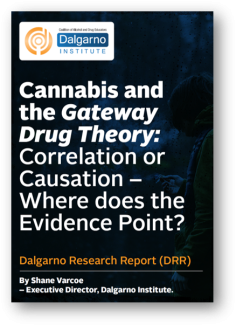
Cannabis and the Gateway Drug Theory: Correlation or Causation – Where does the Evidence Point?
Cannabis and the Gateway Drug Theory: Correlation or Causation – Where does the Evidence Point? (Dalgarno Institute Research Report, October 2021)
This Research Report looks a the ever oscillating debate around Cannabis and the 'Gateway...
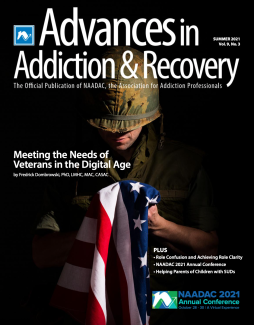
Advances in Addiction and Recovery
Advances in Addiction & Recovery, the official publication of NAADAC, is a quarterly digital magazine focused on providing useful, innovative and timely information on trends and best practices in the profession that are beneficial for...
Identifying content-based engagement patterns in a smoking cessation website and associations with user characteristics and cessation outcomes: a sequence and cluster analysis
Tobacco smoking is the greatest cause of sickness and early death worldwide, with 8 million people dying each year from a smoking-related condition. The use of pharmaceutical or behavioural assistance improves smokers' chances of quitting...