
Chaotic Lifestyle: Causes, Signs, and Clinical Implications
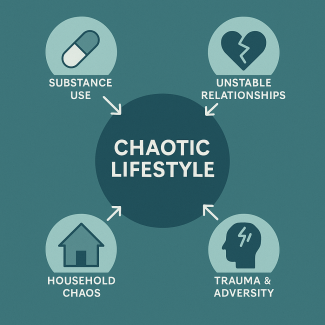
Chaotic Lifestyle: Causes, Signs, and Clinical Implications
Medically Reviewed by: Brandon McNally, RN
Author: Benjamin Zohar, NCACIP
Audience: addiction professionals, mental health practitioners, social care staff, and public health workers.
For a comprehensive academic and public-health analysis of chaotic lifestyles, household chaos, and disorganized attachment, see my full review: Chaotic Lifestyles, Household Chaos, and Chaotic Attachment: Clinical and Public Health Perspectives.
A chaotic lifestyle is a pattern of chronic instability affecting routines, relationships, responsibilities, and environmental conditions. It often reflects cumulative stress, trauma, structural disadvantage, and household chaos rather than personal failure or “non-compliance.”
What Is a Chaotic Lifestyle?
A chaotic lifestyle refers to ongoing instability in daily routines, relationships, responsibilities, and environmental conditions. It is not a diagnosis. Instead, it describes a pattern of chronic unpredictability that makes it difficult for individuals to maintain health, safety, treatment engagement, or stable functioning.
Chaotic lifestyles are strongly associated with:
- household chaos (noise, disorder, lack of routine)
- trauma histories and disorganized attachment
- substance use and co-occurring mental health challenges
- poverty, homelessness, or unsafe housing
- stressful or inconsistent caregiving environments
Understanding chaotic lifestyles is essential for designing trauma-informed, flexible, and realistic addiction and mental health interventions.
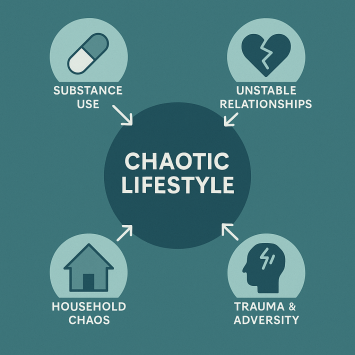
Core Features of a Chaotic Lifestyle
| Feature | Description |
|---|---|
| Lack of routine | Inconsistent sleep, meals, appointments, or daily structure. |
| Unpredictable events | Frequent crises, instability, emergencies, and disruptions. |
| Complex relationships | Conflict, inconsistency, rapid changes, or unsafe dynamics. |
| High stress load | Ongoing environmental or situational stressors that overwhelm coping capacity. |
| Difficulty engaging with services | Missed appointments, challenges following treatment plans, avoidance due to shame or fear. |
Causes and Contributing Factors
A chaotic lifestyle typically emerges from the interaction of personal, relational, environmental, and structural factors—rather than from personal failure or “non-compliance.”
1. Trauma and Attachment Disruption
Early adversity, inconsistent caregiving, or disorganized attachment patterns can lead to difficulties with:
- emotion regulation
- trust and safety in relationships
- predictability and routine
- coping under stress
2. Household Chaos
High noise, crowding, lack of order, and unpredictable routines (as measured by the CHAOS Scale) can shape lifelong difficulties with stability, executive functioning, and health behaviors.
3. Structural Stressors
- poverty, homelessness, housing instability
- unemployment or insecure work
- limited access to transportation, childcare, or healthcare
- system fragmentation or punitive service models
4. Co-Occurring Mental Health and Substance Use
Substance use can both result from and contribute to instability. Withdrawal, cravings, interpersonal conflict, and stigma can further disrupt routines and safety.
Clinical Implications for Addiction and Mental Health Services
1. Assessment Considerations
- Assess environmental stability (noise, crowding, routines).
- Screen for trauma and attachment-related challenges.
- Identify structural barriers (housing, transportation, finances).
- Explore caregiving responsibilities and daily demands.
2. Treatment Engagement
Many individuals with chaotic lifestyles struggle with traditional appointment-based models. Effective care includes:
- low-threshold access
- walk-in or flexible appointments
- outreach and mobile services
- multi-disciplinary support teams
- non-punitive responses to missed appointments
3. Trauma-Informed Practice
Key principles include:
- safety and predictability
- trustworthiness
- choice and collaboration
- empowerment and strengths-based care
How to Support Someone Living a Chaotic Lifestyle
- Start with stabilizing basic routines (sleep, meals, medications).
- Address environmental chaos where possible (noise, clutter, unsafe relationships).
- Use simple, concrete, step-by-step plans.
- Build consistency through small repeated practices.
- Involve family or supportive others when appropriate.
Quick Checklist for Practitioners
- Is the home environment chaotic?
- Are there attachment-related concerns?
- What immediate stressors are destabilizing daily life?
- What strengths or stabilizers already exist?
- How can services be made more flexible?
Frequently Asked Questions
Is a chaotic lifestyle a mental illness?
No. It is a pattern of instability influenced by trauma, environmental chaos, structural barriers, and co-occurring difficulties.
Is chaotic lifestyle linked to addiction?
Chaotic lifestyles and substance use often reinforce one another—instability can increase risk of relapse, while addiction can intensify chaos.
Can people change chaotic lifestyle patterns?
Yes. With trauma-informed support, environmental stabilization, and flexible services, individuals can develop routines, safety, and healthier coping.
What is the difference between chaotic lifestyle and chaotic attachment?
Chaotic lifestyle is a behavioral pattern; chaotic or disorganized attachment is a relationship pattern shaped by early caregiving.
References (Optimized)
- Marsh S, Dobson R, Maddison R. (2020). Household chaos and child, parent, and family outcomes: A systematic scoping review. BMC Public Health.
- Matheny AP, Wachs TD, Ludwig JL, Phillips K. (1995). Psychometric characteristics of the CHAOS scale. Journal of Applied Developmental Psychology.
- Larsen S et al. (2023). Measuring CHAOS? Evaluating the Short-Form Confusion, Hubbub, and Order Scale. Collabra: Psychology.
- National Institute on Drug Abuse (NIDA). (2024). Stress, Trauma, and Addiction Risk.
- Centers for Disease Control and Prevention (CDC). (2024). Social Determinants of Health.
- SAMHSA. (2024). Trauma and Violence: Clinical Considerations for Substance Use Treatment.
- American Psychological Association (APA). (2023). Attachment and Development: Clinical Highlights.
- World Health Organization (WHO). (2024). Mental Health: Strengthening Our Response.