Is Adderall Still in Shortage in 2026?
Is Adderall Still in Shortage in 2026?
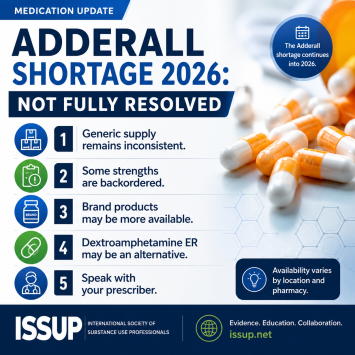
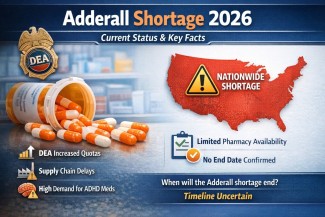
Yes. As of June 2026, the Adderall shortage that began in October 2022 remains unresolved. The American Society of Health-System Pharmacists (ASHP) continues to list both immediate-release and extended-release amphetamine mixed salts in active shortage. The FDA's original shortage notice, first posted in October 2022, also remains live.
The shortage has now persisted for over three years across multiple manufacturers, formulations, and dosage strengths. While DEA quota increases in late 2025 and early 2026 have improved conditions, supply remains inconsistent — particularly for higher-dose formulations commonly prescribed to adults.
For background on how the shortage developed through 2025, including its structural origins and early policy responses, see our earlier analysis: 2025 ADHD Stimulant Shortage: Patient & Provider Guidance.
Manufacturer-by-Manufacturer Status (2026)
The following availability data is sourced directly from ASHP's Drug Shortage Detail pages. Because manufacturer status changes frequently, providers and patients should verify current availability through ASHP's Drug Shortage Database before making prescribing or dispensing decisions.
Immediate-Release (IR) Tablets
- Teva has brand Adderall IR available. Generic amphetamine mixed salts 5 mg and 30 mg IR tablets are on intermittent back order, with product being released as it becomes available. The 20 mg generic IR tablets are on back order with no estimated release date. The generic shortage is attributed to active ingredient delays.
- Rhodes has 5 mg, 7.5 mg, 10 mg, 12.5 mg, 15 mg, and 20 mg IR tablets on back order with no estimated release date. Rhodes did not provide a reason for the shortage.
- Alvogen has 15 mg IR tablets on back order with no estimated release date. The 5 mg, 10 mg, 20 mg, and 30 mg IR tablets are in limited supply. Shortage attributed to active ingredient shortage.
- Elite Laboratories has all IR presentations in limited supply due to active ingredient shortage.
- Mallinckrodt has 5 mg IR tablets on intermittent back order. Other strengths available.
- Oryza Pharmaceuticals (US Pharma) reports shortage due to shipping delays.
- Aurobindo refuses to provide availability information.
- Mylan and Zydus have discontinued amphetamine mixed salt IR tablets.
- Currently available from: Camber, Epic Pharma, Granules, Lannett, Sunrise, and Teva (brand Adderall).
Source: ASHP Drug Shortage Detail: Amphetamine Mixed Salts, Immediate-Release Tablets
Extended-Release (XR) Capsules
- Teva has multiple XR capsule strengths on back order due to increased demand. Estimated release dates have been provided for some strengths but are subject to revision. Check the ASHP XR shortage detail page for current estimated dates.
- Rhodes has 30 mg XR capsules on back order. No reason provided.
- Amneal has XR capsules in shortage. No reason provided.
- Camber has XR capsules in shortage. No reason provided.
- Mallinckrodt refuses to provide availability information for XR.
- Par, Prasco, Sandoz, and Sun Pharma have all discontinued amphetamine mixed salts XR capsules.
- Currently available from: Shire (brand Adderall XR and Mydayis), Lannett, Aytu BioPharma (Adzenys XR ODT), and Tris Pharma (Dynavel XR).
Source: ASHP Drug Shortage Detail: Amphetamine Extended-Release Oral Presentations
Most Affected Dosage Strengths
The 20 mg and 30 mg immediate-release tablets remain the hardest IR strengths to locate, as these are the most commonly prescribed adult doses. For extended-release, the 15 mg, 25 mg, and 30 mg capsules have been the most constrained. Lower strengths (5 mg and 10 mg) are generally more available but still subject to intermittent shortages at individual pharmacies and in certain regions.
DEA Production Quota Changes (2025–2026)
The Drug Enforcement Administration took two significant actions between late 2025 and early 2026 that directly affect amphetamine supply.
October 2025: First Major Quota Increase in Years
Effective October 2, 2025, the DEA raised the aggregate production quota (APQ) for d-amphetamine from 21.2 million grams to 26.5 million grams — a 25% increase. It also increased the APQ for methylphenidate. The DEA stated the increases were necessary to accommodate product development activities, though the agency denied that prior quotas were insufficient to meet medical demand.
January 2026: Final 2026 APQs
On January 5, 2026, the DEA published a final order establishing the 2026 aggregate production quotas. The DEA stated publicly that the action was intended to help ensure patients can access needed medications.
Key 2026 figures:
- d,l-amphetamine (racemic amphetamine — the primary active ingredient in Adderall): Set at 24,234,443 grams, approximately 14% above the originally proposed level.
- Lisdexamfetamine (Vyvanse): Increased to 51,290,743 grams, reflecting rising domestic prescribing and growing international demand. Nearly 30 countries have now approved lisdexamfetamine, and Vyvanse is expected to launch in additional markets between 2025 and 2027.
- d-amphetamine (for conversion): Increased to support lisdexamfetamine manufacturing.
The proposed rule, published November 28, 2025, drew over 5,000 public comments — primarily from patients and healthcare providers describing difficulties filling prescriptions, forced medication switches, and downstream mental health effects of disrupted stimulant access.
Why Quotas Alone Don't Resolve the Shortage
Raising the production ceiling is necessary but not sufficient. Manufacturers are not required to produce up to their allocated quota. Production lead times, API sourcing, quality assurance processes, and distribution logistics create months-long delays between quota increases and pharmacy-level availability. The DEA's quota system is structurally backward-looking, relying on historical dispensing data that lags behind real-time demand growth.
Why the Shortage Continues in 2026
Active Ingredient (API) Shortages
Multiple manufacturers — including Alvogen, Elite Laboratories, and Teva (for generics) — have cited shortage of active pharmaceutical ingredient as the reason for their supply constraints. API supply chains for controlled substances are subject to international sourcing vulnerabilities and regulatory bottlenecks that compound the effects of quota limitations.
Manufacturing Concentration
Teva Pharmaceuticals produces more generic Adderall — both IR and XR — than any other manufacturer. When Teva experiences production delays, as it has intermittently since late 2022, the impact is disproportionate. Several other manufacturers (Par, Prasco, Sandoz, Sun Pharma, Mylan, Zydus) have discontinued their amphetamine mixed salts products, further concentrating supply among fewer producers.
Sustained Demand Growth
ADHD diagnoses continue to rise across all age groups. DEA data from the 2026 proposed rule show that domestic medical use of Schedule II stimulants (amphetamine, methylphenidate, and lisdexamfetamine) increased an average of 6.74% in 2024 compared to 2023, with projected domestic use increases of 8.94% for 2026. A CDC MMWR report from October 2024 estimated that 15.5 million U.S. adults had received an ADHD diagnosis, with 71.5% of those taking stimulant medication reporting difficulty filling their prescriptions.
Source: MMWR: ADHD Diagnosis, Treatment, and Telehealth Use in Adults (October 2024)
Manufacturer Discontinuations
The competitive landscape for generic amphetamine mixed salts has narrowed. Discontinued manufacturers include:
- IR: Mylan, Zydus
- XR: Par, Prasco (March 2024), Sandoz, Sun Pharma
Each discontinuation concentrates demand among remaining producers and reduces supply chain resilience.
Public Health Impact
The prolonged shortage has produced cascading effects on patients and healthcare systems. Individuals with co-occurring substance use disorders who lose access to prescribed stimulant medications face elevated relapse risk. Untreated or inadequately treated ADHD is independently associated with higher rates of depression, anxiety, substance use disorders, unintentional injuries, and increased suicide attempts.
On June 13, 2024, the CDC issued Health Advisory HAN-00510, warning that disrupted access to prescription stimulant medications could increase risks for injury and overdose. The advisory noted that patients whose stimulant access is disrupted may seek medication outside the regulated healthcare system, exposing them to counterfeit pills that may contain fentanyl or other dangerous substances.
Research published in the Journal of Pediatric Pharmacy and Therapeutics (2025) analyzed drug shortage data from 2001 to 2023 and found that amphetamine salts experienced 10 separate shortage events during that period, with a mean resolved-shortage duration of 20.7 months. The current shortage has already surpassed that average.
What Patients Can Do in 2026
- Check independent pharmacies. They often source from different distributors than national chains and may have stock when larger pharmacies do not.
- Ask about dose flexibility. If your specific strength is unavailable, your prescriber may be able to write for a different strength combination (e.g., two 10 mg tablets instead of one 20 mg) to achieve the same daily dose.
- Consider alternative formulations. Xelstrym (dextroamphetamine transdermal patch) offers an alternative delivery method. Generic lisdexamfetamine (generic Vyvanse), available since 2023, may be easier to locate in some areas.
- Use electronic prescription transfer. DEA regulations allow a one-time transfer of initial dispensing of an electronic prescription for Schedules II–V controlled substances from one retail pharmacy to another, if authorized under state law.
- Time your refills. Controlled substance shipments tend to arrive at pharmacies early in the month. Calling ahead to check stock before visiting can save time.
- Ask about non-stimulant options. Atomoxetine (Strattera), viloxazine (Qelbree), and guanfacine ER are FDA-approved for ADHD and are not subject to DEA production quotas.
What Providers Can Do
- Document shortage-related treatment disruptions in patient records to support continuity of care, prior authorization appeals, and insurance exception requests.
- Proactively discuss contingency plans with patients before their current supply runs out. Identifying a backup medication in advance reduces gaps in treatment.
- Monitor ASHP updates. The ASHP Drug Shortage Center provides manufacturer-level availability data updated regularly.
- Screen for co-occurring substance use. Patients whose stimulant access is disrupted may be at elevated risk for self-medication or relapse. Validated screening tools such as the WHO AUDIT can support early identification.
- Report shortages. Providers can report drug shortage information directly to the ASHP/University of Utah Drug Information Service to help maintain accurate national tracking.
When Will the Adderall Shortage End?
There is no confirmed end date. The DEA's 2026 quota increases — including a 25% increase for d-amphetamine and a 14% increase for d,l-amphetamine above proposed levels — are meaningful steps, but their effects take months to reach pharmacy shelves as manufacturers ramp up production, source raw materials, and distribute finished products.
Factors supporting improvement:
- Additional generic manufacturers have entered or expanded amphetamine production.
- The DEA has shown increased willingness to adjust quotas in response to shortage data and public pressure.
- Over 5,000 public comments on the 2026 proposed quotas indicate sustained policy attention.
- Generic lisdexamfetamine availability provides a partial alternative supply pathway.
Factors working against resolution:
- The quota system's structural reliance on backward-looking data.
- Ongoing manufacturer discontinuations narrowing the producer base.
- Persistent API supply chain vulnerability.
- Growing international demand for lisdexamfetamine competing with domestic allocation.
Adderall Shortage Timeline (2022–2026)
- October 2022: FDA posts initial shortage notice for IR amphetamine mixed salts following manufacturing delays at Teva.
- Early 2023: Shortage expands to Sandoz, Amneal, and Rhodes. XR formulations affected. Generic lisdexamfetamine (Vyvanse) launches.
- June 2024: CDC issues Health Advisory HAN-00510 warning that disrupted stimulant access could increase risk of injury and overdose.
- October 2024: CDC MMWR reports 15.5 million U.S. adults with ADHD diagnosis; 71.5% of those on stimulants reported difficulty filling prescriptions.
- October 2025: DEA raises d-amphetamine APQ 25% (21.2M → 26.5M grams) — the first major quota increase in years.
- November 2025: DEA publishes proposed 2026 quotas. Federal Register data shows 6.74% domestic stimulant use increase in 2024.
- January 2026: DEA finalizes 2026 APQs. d,l-amphetamine set at 24.2M grams (~14% above proposal). Lisdexamfetamine set at 51.3M grams.
- March 2026: ASHP lists both IR and XR formulations in active shortage. Multiple manufacturers report continued backorders. Gradual improvement reported but not resolved.
Frequently Asked Questions
Is there an Adderall shortage right now?
Yes. As of March 2026, ASHP continues to list both immediate-release and extended-release amphetamine mixed salts in active shortage. The FDA's original shortage notice from October 2022 also remains posted. While conditions have improved from the worst periods in 2023–2024, supply remains inconsistent across pharmacies, regions, and dosage strengths.
Is the Adderall shortage over?
No. The shortage is improving but not resolved. The DEA increased d-amphetamine production quotas by 25% in October 2025 and finalized additional increases in January 2026. These steps are expected to help gradually, but multiple manufacturers — including Teva, Rhodes, and Alvogen — continue to report backorders on specific strengths. There is no confirmed end date for the shortage.
Why is there an Adderall shortage?
The shortage results from three converging factors: (1) DEA aggregate production quotas that have historically lagged behind demand growth, (2) manufacturing and active ingredient supply chain disruptions affecting multiple generic producers, and (3) sustained increases in ADHD diagnoses and prescribing across all age groups. DEA data show domestic stimulant use increased 6.74% in 2024 compared to 2023. Several manufacturers (Mylan, Zydus, Par, Sandoz, Sun Pharma) have also discontinued their amphetamine products, concentrating supply among fewer companies.
Is there a nationwide Adderall shortage?
Yes. The shortage is national in scope, though its severity varies by region. ASHP's shortage listings reflect nationwide conditions, and the CDC issued a Health Advisory (HAN-00510) on June 13, 2024 specifically addressing disrupted access to prescription stimulant medications at the national level. Some areas, including parts of the Midwest, Florida, and metro areas like NYC and Chicago, have been reported as particularly affected.
Why is there a shortage of Adderall XR?
Extended-release (XR) capsules have been especially hard to find because Teva — the largest generic Adderall XR producer — has experienced ongoing production delays attributed to increased demand. Additionally, several XR manufacturers have fully discontinued their products: Par, Prasco (March 2024), Sandoz, and Sun Pharma have all exited the market. This concentrates XR supply among fewer manufacturers, making the XR shortage more severe than IR for certain strengths (particularly 15 mg, 25 mg, and 30 mg).
Is there a generic Adderall shortage?
Yes. The shortage primarily affects generic amphetamine mixed salts, not the brand-name products. Teva reports that brand Adderall IR is available, but its generic versions remain on intermittent back order. ASHP's shortage detail pages track the status of each generic manufacturer individually — the situation varies by manufacturer and strength.
When will the Adderall shortage end?
There is no confirmed end date. The DEA's 2026 quota increases and new generic manufacturers entering production are positive signs, but manufacturing lead times, API sourcing delays, and distribution logistics mean the effects take months to reach pharmacy shelves. Industry observers suggest consistent nationwide availability may not be fully restored until late 2026 at the earliest.
Is there a Vyvanse shortage too?
Vyvanse (lisdexamfetamine) has also experienced intermittent shortages. Generic lisdexamfetamine became available in 2023, and the DEA increased the lisdexamfetamine APQ to 51.3 million grams for 2026 — a meaningful increase to accommodate both rising domestic prescribing and growing international demand. Generic Vyvanse may be easier to locate than generic Adderall in some areas, making it a potential alternative to discuss with your prescriber.
What can I take instead of Adderall?
Several FDA-approved alternatives exist. For stimulant options: lisdexamfetamine (generic Vyvanse), methylphenidate-based medications (Ritalin, Concerta), dextroamphetamine (Dexedrine), and Xelstrym (dextroamphetamine transdermal patch). For non-stimulant options that are not subject to DEA production quotas: atomoxetine (Strattera), viloxazine (Qelbree), and guanfacine ER (Intuniv). Mydayis, a long-acting mixed amphetamine salts formulation, may also be available when standard Adderall XR is not. All medication changes should be made in consultation with your prescriber.
Is CVS or Walgreens out of Adderall?
Availability at CVS, Walgreens, and other national chain pharmacies varies significantly by location, strength, and timing. The shortage affects all pharmacy types, but independent pharmacies often source from different distributors and may have stock when chain pharmacies do not. Calling ahead to check availability before visiting — and trying multiple pharmacies — is the most effective strategy during the shortage.
What is the FDA doing about the Adderall shortage?
The FDA posted its initial shortage notice in October 2022 and has been coordinating with manufacturers to address supply issues. The FDA works with the DEA on quota adjustments and has facilitated import approvals when domestic supply is insufficient. The FDA's shortage page for Adderall remains live and is periodically updated with manufacturer status information.
What are the withdrawal symptoms of stopping Adderall?
Patients who abruptly lose access to stimulant medication due to the shortage may experience fatigue, increased appetite, depressed mood, sleep disturbances, and difficulty concentrating. These symptoms reflect stimulant discontinuation, not addiction, and are a recognized clinical concern during supply disruptions. The CDC's June 2024 Health Advisory specifically warned about risks associated with disrupted stimulant access. Patients should contact their prescriber before making any changes to their medication regimen.
References
- ASHP: Amphetamine Mixed Salts IR – Shortage Detail
- ASHP: Amphetamine Extended-Release Oral Presentations – Shortage Detail
- Federal Register: 2026 Established Aggregate Production Quotas (Jan. 5, 2026)
- DEA Press Release: 2026 Aggregate Production Quotas (Jan. 9, 2026)
- Federal Register: 2026 Proposed APQs (Nov. 28, 2025)
- DEA Raises Adderall Production Quotas – Filter Magazine (Oct. 2025)
- FDA Announces Shortage of Adderall (Oct. 2022)
- CDC Health Advisory HAN-00510: Disrupted Access to Prescription Stimulant Medications (June 13, 2024)
- CDC MMWR: ADHD Diagnosis, Treatment, and Telehealth Use in Adults (Oct. 2024)
- Drug Shortages for Prescription Amphetamine Derivatives – PMC (2025)
- Changes in Stimulant Dispensing to US Children – AAP Pediatrics (2025)
- ADHD Medication Shortage: DEA Regulations and Policy Analysis (Nov. 2025)
- 2025 ADHD Stimulant Shortage: Patient & Provider Guidance – ISSUP
About the Author
Benjamin Zohar, NCACIP is an addiction intervention professional and ISSUP Network Moderator for New York, specializing in treatment navigation, crisis intervention, and clinical-policy translation.
Medically reviewed by Brandon McNally, RN