The range of medical, psychological, and social services designed to help individuals reduce or stop substance use and manage substance use disorders. Treatment may include assessment, counselling and behavioural therapies, medication-assisted treatment, withdrawal management, and support for co-occurring mental or physical health conditions. Effective treatment is typically person-centred and evidence-informed, and may be provided in outpatient, community, or residential settings. Treatment aims to improve health and functioning, reduce substance-related harms, and support individuals in moving toward recovery and long-term wellbeing.
Treatment
Apply to become an ITTC Member
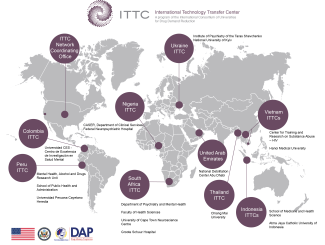
The International Technology Transfer Center (ITTC) is accepting applications for new members! ITTC is a global network dedicated to advancing technology and innovation. Through culturally and linguistically appropriate, cutting-edge...
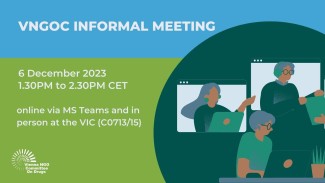
Vienna NGO Committee on Drugs Informal Meeting
The board of the Vienna NGO Committee on Drugs is inviting all members and interested NGOs to participate in an informal membership meeting on Wednesday, 6 December, 1.30PM to 2.30PM CET (Vienna time, UTC+1).
Science of Self-Care: How It Helps and Why It Matters
ISSUP presents its webinar on the science behind self-care. This webinar discusses the science of self-care, why it important, and how it works physiologically and neurologically.
NIDA HIV Seminar Series - Integrating Addiction and HIV Prevention and Treatment for Everyone and Bringing it to Where They Live
Join the NIDA HIV Research Program for the upcoming NIDA HIV Seminar with Dr. Sandra Springer of Yale School of Medicine, 2022 recipient of the NIDA HIV Avant-Garde Award, for her presentation "Integrating Addiction and HIV Prevention and Treatment for Everyone and Bringing it to Where They Live."
La pericia psicológica y su valoración en la imposición de sanciones penales en casos con consumo de sustancias psicoactivas
English Around the world, using drugs is connected to both the legal system and the health system. Studies suggest a link between drug use and crime, but they say it's not a direct cause. In many countries, the legal system is overwhelmed...
A UK national study of prevalence and correlates of adopting or not adopting a recovery identity among individuals who have overcome a drug or alcohol problem
Background: In the last 20 years, the term "recovery" has become crucial in dealing with addiction. However, different groups, such as researchers, clinicians, policymakers, and people with lived experience of alcohol or drug (AOD) problems...
Challenges in substance use treatment as perceived by professionals and Arabic-speaking refugees in Germany
Background This study explores substance use (SU) and substance use disorders (SUDs) among Arabic-speaking refugees in Germany. The research investigates the challenges and experiences related to SU treatment from the perspectives of both...
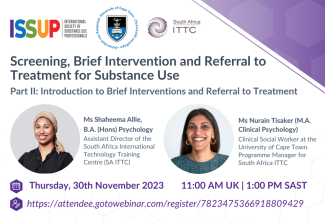
Screening, Brief Intervention and Referral to Treatment for Substance Use. Part II: Introduction to Brief Interventions and Referral to Treatment
ISSUP is pleased to present part two of its webinar series on Screening, Brief Intervention, and Referral to Treatment (SBIRT). This two-part series has been organised in collaboration with ISSUP Global, The South Africa International Technology Transfer Centre (ITTC), and the University of Cape Town, South Africa.
Screening, Brief Intervention and Referral to Treatment for Substance Use. Part II: Introduction to Brief Interventions and Referral to Treatment
ISSUP is pleased to present part two of its webinar series on Screening, Brief Intervention, and Referral to Treatment (SBIRT). This two-part series has been organised in collaboration with ISSUP Global, The South Africa International Technology Transfer Centre (ITTC), and the University of Cape Town, South Africa.
Screening, Brief Intervention and Referral to Treatment for Substance Use. Part I: Introduction to SBIRT and Screening Tools for Substance Use.
ISSUP is pleased to present a webinar on Screening, Brief Intervention and Referral to Treatment (SBIRT). This two-part series has been organised as a collaboration between ISSUP Global, The South Africa International Technology Transfer Centre (ITTC) and the University of Cape Town, South Africa.