Psychoactive Substances

Psychoactive substances are natural or synthetic substances that act on the central nervous system and alter mental processes such as mood, perception, cognition, consciousness, and behaviour. These substances may be legally prescribed medications (e.g., pain medications or sedatives), legally available substances such as alcohol or caffeine, or controlled or illicit drugs. Psychoactive substances can be used for medical, social, cultural, or recreational purposes, but some carry risks of misuse, dependence, and health or social harms when used in harmful ways. 

Teens and substance use — what can parents do?

Video and audio recordings
Objective: To help adults manage risks relating to adolescent substance use in line with evidence-based prevention principles. Background: Smoking and drinking among 15–16-year-old school students are showing signs of decline, but there are...

Understanding the risks of mixing drugs

Video and audio recordings
 - 
February 17, 2022 Mixing drugs, also known as polysubstance use, occurs when two or more drugs are taken together or within a short time period, intentionally or unintentionally. Even if someone has mixed drugs before, or mixes drugs often...

Polysubstance Use Facts

Leaflet, Infographic, Fact sheet, Poster
What is polysubstance use? The use of more than one drug, also known as polysubstance use, is common. This includes when two or more are taken together or within a short time period, either intentionally or unintentionally. Intentional...

Strategies to Address Cocaine and Methamphetamine

Video and audio recordings
Presented by Richard Rawson, PhD, Emeritus Professor in the Department of Psychiatry and Biobehavioral Science, UCLA School of Medicine and a Research Professor at the University of Vermont, this presentation provided an overview of the...

Cocaine Reading List

Reading List
Cocaine is an addictive stimulant drug that originates from the leaves of the coca plant, which is indigenous to South America. The drug's effects include heightened alertness, attention, and energy, as well as feelings of euphoria and...

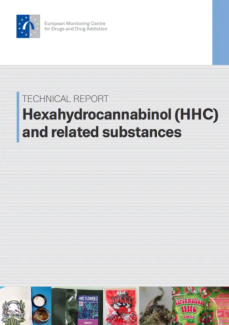
Hexahydrocannabinol (HHC) and related substances

Book
Introduction The markets for hexahydrocannabinol (HHC) and related semi-synthetic cannabinoids (SSC) are rapidly evolving areas with relatively limited information currently available. The European situation presented in Section 1 can only...

Responding to stimulant use — developments in treatment

Video and audio recordings
Objective: To better understand current developments in the treatment of stimulant use. Background: Stimulant drugs are second only to cannabis as the most widely used class of illicit drug globally, accounting for 68 million past-year...