The activities of authorised agencies such as police, customs, border services, and investigative bodies to enforce drug control laws and address criminal activities related to the production, trafficking, and distribution of illicit substances. These activities may include investigations, intelligence gathering, interdiction, and collaboration with national and international partners to disrupt organised crime networks. Law enforcement plays an important role in protecting public safety and maintaining the rule of law, and is most effective when coordinated with broader public health, prevention, treatment, and recovery efforts as part of a balanced and comprehensive response to substance use.
Law Enforcement
UNODC Webinar: Drug Treatment, Care & Recovery for People, Families & Communities in the COVID-19 Crisis in Southeast Asia
UNODC Prevention, Treatment, and Rehabilitation Section (PTRS), in collaboration with the WHO, International Experts from Australia and Italy, the Colombo Plan, UNODC Regional Office for Southeast Asia and the Pacific (ROSEAP) and field...
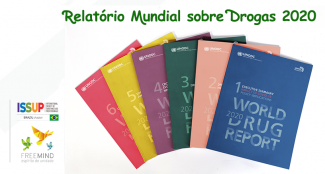
World Drug Report 2020
Global drug consumption increases, while COVID-19 impacts markets, according to the World Drug Report 2020, released on June 25, 2020 by the United Nations Office on Drugs and Crime (UNODC). The Report shows that around 269 million people...
Association of Recreational Cannabis Laws in Colorado and Washington State With Changes in Traffic Fatalities, 2005-2017
Abstract Importance: An important consequence of cannabis legalization is the potential increase in the number of cannabis-impaired drivers on roads, which may result in higher rates of traffic-related injuries and fatalities. To date...
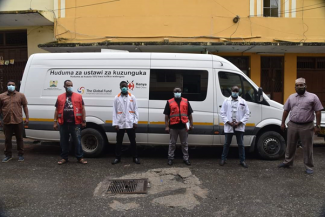
UNODC Ensuring Continuum of Care for People Who Use and Inject Drugs, Including Those in Prisons During COVID-19 in Coastal Kenya
The United Nations Office on Drugs and Crime (UNODC) Regional Office for Eastern Africa (ROEA) supports Kenyan counties in COVID-19 prevention efforts for key and most vulnerable populations. In the spirit of leaving no one behind...
Better Knowledge for Better Care: Changing Substance Use Treatment and Prevention Narratives in Nigeria
International Day against Drug Abuse and Illicit Trafficking Better Knowledge for Better Care Changing Substance Use Treatment and Prevention Narratives in Nigeria The United Nations International Day against Drug Abuse and Illicit...
Medication-Assisted Treatment (MAT) for Opioid Use Disorder in Jails and Prisons
People who have been incarcerated are approximately 100 times more likely to die by overdose in the first two weeks after their release than the general public. Despite high rates of opioid use disorder among justice-involved individuals...
Leveraging Partnerships in Planning
This webinar highlights the value of partnering with elected officials, law enforcement professionals, school administrators and educators, parent and student organizations, faith-based organizations, local media and businesses for a...
Buprenorphine prescribing in criminal justice settings: the real picture
This webinar discusses buprenorphine prescribing in criminal justice settings in both secure environments and the community. Topics covered include: an overview of different formulations of buprenorphine the impact of diversion on...
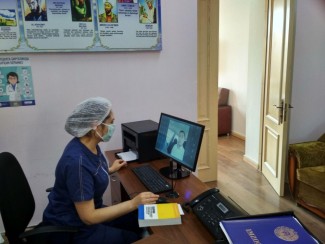
UNODC Trained Treatment and Care Professionals Providing Valuable Support to People with Drug Use Disorders in Bukhara Region of Uzbekistan during COVID-19
Introduction of the quarantine measures in Bukhara Region, Uzbekistan made it extremely difficult to provide drug dependence treatment services to the population of the region. This negatively affected the quality of life of people with...
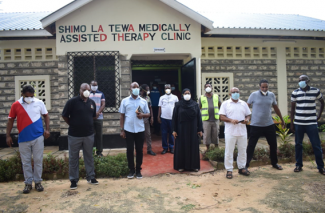
Drug Use and COVID-19 in Prisons: First Clinic Dedicated to the Treatment of People Living in Prisons with Opioid Use Disorders in Kenya
In 2018, Mombasa planned to set up a methadone programme for heroin injecting drug users living in prisons. As a follow up, UNODC worked together with the County of Mombasa and the Kenya Prison Service in 2019, to support and expand...