
The activities of authorised agencies such as police, customs, border services, and investigative bodies to enforce drug control laws and address criminal activities related to the production, trafficking, and distribution of illicit substances. These activities may include investigations, intelligence gathering, interdiction, and collaboration with national and international partners to disrupt organised crime networks. Law enforcement plays an important role in protecting public safety and maintaining the rule of law, and is most effective when coordinated with broader public health, prevention, treatment, and recovery efforts as part of a balanced and comprehensive response to substance use.
Law Enforcement
UNODC PTRS Organized Informal Expert Consultation on Substance Use Disorders in Humanitarian Settings
According to the UN High Commissioner for Refugees (UNHCR) there are now close to 80 million forcibly displaced people worldwide, and with mental health among this segment of the world’s population already a neglected area, the treatment of...
Some effective tactics for preventing drug use
National and international drug prevention networks, community leaders and strong community coalitions are the key to changing public attitudes and reducing the availability of illicit drugs worldwide. Some effective tactics include...
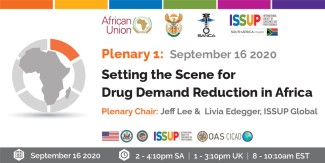
Plenary 1: Setting the Scene for Drug Demand Reduction in Africa
The First Plenary Session of the 'Drug Demand Reduction in Africa: Prevention, Treatment and Epidemiology' Virtual Conference from 16th September to 10th November 2020.
Drugs put the entire community at risk
Discussions on the decriminalization of drug possession for personal consumption are increasing, including an extraordinary appeal still pending judgment in the Supreme Court on this subject (RExt. 635.659). However, it is frightening to...
Report of the Pan-African Epidemiology Network on Drug Use (PAENDU) for the period 2016-2017
This is the first report of the Pan-African Epidemiology Network on Drug Use (PAENDU) and is based on available data for 2016 and 2017. The report provides information on the methods used for data collection and presents data on drug demand...
Universal Prevention Curriculum (UPC) 2020 Programme Implementation in Pakistan
The United Nations Office on Drugs and Crime (UNODC) in collaboration with the Ministry of Narcotics Control (MNC) and support from Bureau of International Narcotics and Law Enforcement Affairs of the U.S. Department of State (INL) is in...
Migrant Communities and the COVID-19 Response in Sub-Saharan Africa
Migrant communities and the COVID-19 response in sub-Saharan Africa Ikenna Daniel Molobe1,&, Oluwakemi Ololade Odukoya1,2, Brenda Chukwufunanya Isikekpei3, Flavio Francisco Marsiglia4 1Non-Communicable Disease Research Group, University of...
Incarceration Impacts Cognitive Performance, and Prisoner Status Matters
Abstract Globally, incarceration is understood to impoverish the wellbeing of prisoners, but evidence for its impact on cognitive performance is less popular. As most evidence on the criminal justice system has come from advanced western...
Study on the Impact of COVID-19 on Drug Use Situation and Services for People who Use Drugs in Central Asia
UNODC Mentor in collaboration with colleagues from Coordination and Analysis Unit of the UNODC Regional Office for Central Asia conducted a rapid assessment in four countries of Central Asia. The main goal of the brief research was to study...
Bi-Monthly Webinar: ISSUP Nigeria Knowledge Update Series
The first session of ISSUP Nigeria's Knowledge Update Series took place on Thursday 30th July 2020. It focused on experiences and challenges in delivering drug demand reduction interventions during the COVID-19 pandemic, capacity building on evidence-based substance abuse prevention and treatment interventions, and the way forward.