

William White: The Architect of Modern Recovery Science
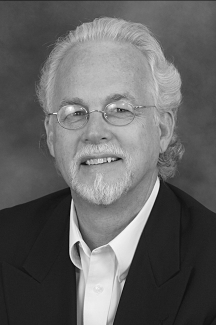
William White has become one of the defining voices in the world of recovery. He did not set out to lead the movement – he set out to understand the people treatment systems were failing. Over the last five decades, his work has helped to give recovery its language and science. Where others studied addiction, White studied recovery – and that changed everything.
White began his journey in the field in the late 1960’s, a time when addiction treatment included long-term institutionalisation, coercion, and methods designed to “break” a person before rebuilding them back. He was tasked with screening patients for potential community placement in psychiatric facilities. White often recounts how his early experiences sparked his activism and desire to see change. He once said, “Forty years later, I can vividly recall the leather restraints and straightjackets, the hydrotherapy tubs, the over-crowded wards, the stench of urine and paraldehyde and the feeling of utter hopelessness that permeated those institutions.” Something just wasn’t right. He decided that things needed to change.
That commitment drove a fiery passion in him – from starting community-based treatment centres to building one of the most substantial bodies of work in the world of recovery science. He is regarded as one of the most prolific authors on addiction and recovery, having co-authored over 400 articles, books, and chapters on the topic. His work has had a tremendous influence on our modern recovery movements, peer-based recovery support, recovery management and the need for recovery-oriented systems of care.
One of his major works was documenting the evolution of cultural attitudes, policy, addiction treatment approaches, and grassroots recovery efforts over the past 200 years in his book, Slaying the Dragon: The History of Addiction Treatment and Recovery in America. As a historian of recovery cultures, his work has given the recovery field an identity and a voice.
His most influential contribution came through the refinement and development of recovery capital – the notion that recovery is not only about interventions but more about resources. Internal strengths, social connections, community attitudes and cultural belonging are foundational to building a meaningful and fulfilling recovery and life. This shifted the field from a problem-focused lens to a strengths-and-resources-driven practice.
Building on this, White has been instrumental in developing the field of peer support and recovery coaching. He spoke about the importance of including people with lived experiences of recovery in modern systems of care. His efforts have legitimised peer work as a professional field through a framework for building and evaluating peer-based programs.
He has been central in challenging the treatment culture that focuses on short-term, acute care. recognising that recovery is not just a single intervention but a coordinated, network system that supports long-term recovery. This was the driving force behind the development of Recovery-Oriented Systems of Care, which sought to build communities that were accessible and supportive, beyond the limited structure of formal treatment.
William White didn’t just write about addiction and recovery. He wrote with and for people in recovery – not just about them. The hallmark of his passion and commitment to the people and world of recovery is his generosity and commitment to sharing knowledge. His decades of research, writing and thinking are accessible to practitioners, peer workers, professionals and people in recovery. His archives are freely available through the Chestnut Health Systems William White library.
White has since retired from formal work, but his influence over the field has continued to shape contemporary recovery science and practice globally.
Perhaps William White’s greatest contribution is not that he slayed the dragon of addiction treatment’s draconian past; he helped the world to imagine a world of recovery as hope and dignity, where no one needs to walk the path of recovery alone.