

Search
 Psychoactive Substances
Psychoactive substances are natural or synthetic substances that act on the central nervous system and alter mental processes such as mood, perception, cognition, consciousness, and behaviour. These substances may be legally prescribed medications (e.g., pain medications or sedatives), legally available substances such as alcohol or caffeine, or controlled or illicit drugs. Psychoactive substances can be used for medical, social, cultural, or recreational purposes, but some carry risks of misuse, dependence, and health or social harms when used in harmful ways.
In- and Out-Group Effects on Social Perception and Empathy in Cocaine Use Disorder
Earlier research revealed that cocaine users display impairments in emotional but not necessarily in cognitive empathy. However, no study to date has tested whether empathy is generally altered or whether impairments are restricted to...
Prevention of substance use during pregnancy - Lecture by Dr. Renata Azevedo
Drug use in Brazil is a real public health problem. When used in a problematic way, it can provoke or increase family crises and violence.
The use or dependence of psychoactive substances by pregnant women is quite worrying, since...
Training on the Management of Substance Use Disorders
On August 20, 2022, in the Kinnaird Center for Learning and Cultural Development (KCLCD) Lahore, a one-day skills workshop for students of Professional Certification in Clinical Psychology (PCCP) batch II was organized.
Dr. Nazish Idrees...

Providing alcohol and other drug treatment in a residential setting
Workers who provide AOD treatment to people in residential settings need to have the most up-to-date and evidenced-based practice approaches at their fingertips.
In this comprehensive resource, you will find research outlining the...
International Research Partnerships: Elements of Success
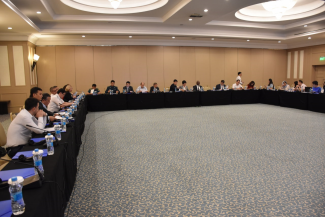
THe presenters for the session were Susana Henriques, from The Open University, Portugal, and Roger Peters, from the University of South Florida.
Dr Henriques and Dr Peters have successfully collaborated on international research, and they...
UNODC discussed the protection of adolescents and young people from psychoactive and narcotic drugs at a round table “Youth for a healthy lifestyle”
On 10 August, 2022, UNODC jointly with the representatives of ministries and state departments of the Republic of Uzbekistan, members of the Youth Parliament at the Legislative Chamber and the Senate of the Oliy Majlis (Parliament), as well...
Is a brain-based understanding of addiction predominant?
Abstract
Introduction
Brain-based explanations of addiction have become a prominent explanatory model in recent decades. Although opposing views have been published, there is no large-scale study of researchers' opinions, unlike for...
Association of Methamphetamine and Opioid Use With Nonfatal Overdose in Rural Communities
Abstract
Importance Overdoses continue to increase in the US, but the contribution of methamphetamine use is understudied in rural communities.
Objective To estimate the prevalence of methamphetamine use and its correlates among people...
Perspectives of service providers on aftercare service provision for persons with substance use disorders at a Rural District in South Africa
Background
Aftercare programs for people with substance use disorders (PWSUD) are frequently challenged with a number of overlapping obstacles, including uncertain policy consequences and a lack of resources. Despite demographic variety...
Socioeconomic lens on addiction
In this webinar, the speakers take a look at the social and economic factors influencing addiction (particularly injecting drug use), and its impact on particularly disadvantaged groups, such as young people transitioning from out of home...
Understanding Stigma and Cognitive Behavioural Interpersonal Skills- PAHO's online self-learning and tutor-guided course
The Pan-American Health Organization (PAHO), jointly with the Mental Health Commission of Canada, will hold a new online self-learning and tutor-guided course "Understanding Stigma and Cognitive Behavioral Interpersonal Skills" from August...

Review of a decade of drug policy: Progress and Challenges
Introduction According to the latest World Drug Report published by the United Nations Office on Drugs and Crime (UNODC) for the year 2022, around 284 million people between the ages of 15 and 64 used drugs.
WHO stakeholder survey on improving access to morphine for medical use
WHO launched a survey on assessing barriers, enablers, and pirority actions for improving access to morphine for medical use.
All Civil Society Organisation can contribute by filling out the survey before 31 August 2022.
The survey is...
Lecture 1: Central Asian open lecture series on Screening, Assessment, and Treatment of Substance use disorders
Open lectures to be provided by the joint initiative between ISSUP Ukraine, ISSUP Kazakhstan, and ITTC Ukraine.
National Roundtable on a Completed Study on the Prevalence of New Psychoactive Substances
We invite specialists of the Ministry of Health of the Republic of Kazakhstan, the Ministry of Internal Affairs of the Republic of Kazakhstan, the Kazakh Scientific Center of Dermatology and Infectious Diseases, representatives of UNODC, UNAIDS, non-governmental organizations, heads and doctors of regional Mental Health Centers.
Improving equity and access to buprenorphine treatment through telemedicine at syringe services programs
Background
In the United States, access to buprenorphine remains low and disparities regarding who receives treatment have emerged. Federal laws have regulated buprenorphine delivery, ultimately limiting its implementation more broadly...
The effects of opioid policy changes on transitions from prescription opioids to heroin, fentanyl and injection drug use: a qualitative analysis
Background
Beginning in the 1990s, non-medical use of prescription opioids (POs) became a major public health crisis. In response to rising rates of opioid dependence and fatal poisonings, measures were instituted to decrease the...
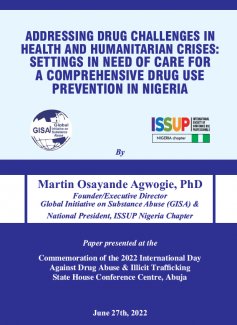
Addressing drug challenges in health and humanitarian crises: Settings in need of care for a comprehensive drug use prevention in Nigeria
Paper presented at the commemoration of the 2022 International Day Against Drug Abuse & Illicit Trafficking, State House Conference Centre, Abuja, Nigeria.
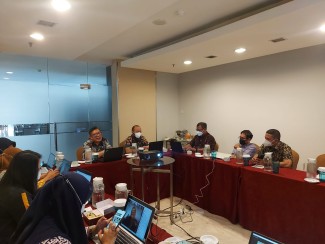
The UNODC/PTRS demand reduction mentor at the UNODC Programme Office in Indonesia provided technical assistance to the National Narcotics Board (BNN) in conducting a national hybrid training for Government Officials on the UNODC Treatnet Family programme
On July 19th, 2022, the Director of Strengthening Government Institution, Deputy of Rehabilitation, BNN officially launched a national hybrid training on the UNODC Treatnet Family programme with 34 representatives from all BNN provinces and...
Bi-Monthly Webinar: ISSUP Nigeria Knowledge Update Series (Thirteenth Session)
ISSUP Nigeria would like to invite you to attend their next Bi-Monthly Webinar in the Knowledge Update Series. The Webinar topic will be Beyond Dependence: Alcohol-induced Disorders.
Learning Outcomes:
• Sensitization to the wide range...