

Search
 Psychoactive Substances
Psychoactive substances are natural or synthetic substances that act on the central nervous system and alter mental processes such as mood, perception, cognition, consciousness, and behaviour. These substances may be legally prescribed medications (e.g., pain medications or sedatives), legally available substances such as alcohol or caffeine, or controlled or illicit drugs. Psychoactive substances can be used for medical, social, cultural, or recreational purposes, but some carry risks of misuse, dependence, and health or social harms when used in harmful ways.
PhD: Addicted to Research Podcast
'PhD: addicted to research' is a podcast created by PhD students funded by the Society for the Study of Addiction and is for anyone doing a PhD or thinking about doing a PhD.
The presenters of the podcast are all at different stages of...
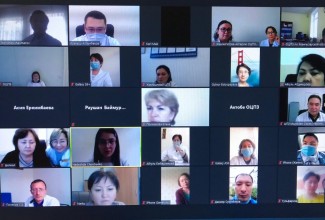
UNODC supports national partners in Kazakhstan to ensure continuity and sustainability of treatment, care and rehabilitation services during the COVIDE-19 pandemic for people who use drugs
On 25 September 2020, UNODC's Regional Mission in Central Asia and the Prevention, Treatment and Rehabilitation Section of UNODC Headquarters, in collaboration with the National Centre for Mental Health Research of the Ministry of Health of...
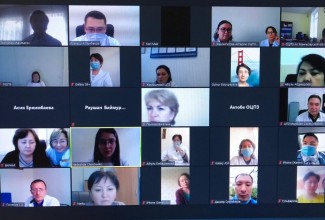
UNODC Supports National Partners in Kazakhstan in Ensuring the Continuity and Sustainability of Treatment, Care and Rehabilitation during the COVID-19 Pandemic for People who Use Drugs
UNODC Regional Office for Central Asia and UNODC PTRS in collaboration with the Republican Scientific and Practical Centre on Mental Health of the Ministry of Health of the Republic of Kazakhstan held national webinar on 25 September 2020...
Webinar | The Fusion of Substance Use and Sex
On November 6th 2020, ISSUP Philippines presented Part II of their upcoming Webinar Series. This Webinar focused on Best Practices: Understanding Why and How to Assess and Treat Co-occurring Disorders: Sex and Drugs.
Webinar | PRODEPENDENCE: Moving Beyond Codependency
On Friday 30th October, ISSUP Philippines presented Part I of their Webinar Series which focused on 'Prodependence: Moving Beyond Codependency'.
Substance Use Disorders and COVID-19: Multi-Faceted Problems Which Require Multi-Pronged Solutions
Persistent use of alcohol, cannabis, nicotine, opioids and stimulants increase risk of substance use disorders (SUDs). SUDs are increasingly viewed as biopsychosocial disorders with multiple risk factors interacting at individual and...
Master’s Program in Addiction Policy and Practice
Georgetown Announces Master’s Program in Addiction Policy and Practice.
The new program seeks to build a national policy workforce to respond to one of the most untreated chronic health conditions in the United States.
Georgetown...
Experiences of Clinicians Transitioning to Telemedicine
The COVID-19 pandemic has forced many practitioners to shift their practice online, using telemedicine to treat Opioid Use Disorder. This has allowed for the continuity of essential care whilst adhering to the social distancing guidelines...

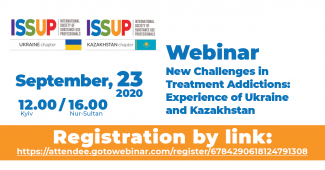
Webinar: New Challenges in Treatment Addictions: Experience of Ukraine and Kazakhstan
On Wednesday 23rd September, ISSUP Ukraine and ISSUP Kazakhstan presented a Webinar on "New Challenges in Treatment Addictions: Experience of Ukraine and Kazakhstan".
Caring for Patients During the COVID-19 Pandemic
Supporting Access to Telehealth for Addiction Services: Regulatory Overview and General Practice Considerations
The purpose of this document, which was put together by the American Society of Addiction Medicine (ASAM), is to provide...

Telehealth Learning Series for SUD Treatment and Recovery Support Providers
The Addiction Technology Transfer Center (ATTC) Network, the Center for Excellence on Protected Health Information (CoE-PHI), the National Consortium of Telehealth Resource Centers, and the Center for the Application of Substance Abuse...
Online Training- Families and Substance Use
Course: Families and substance use: the impact of hidden harm, trauma and protective factors
An online training course, delivered via Zoom.
The training will take place over two days and four separate sessions, lasting two and a half...
Mind Matters Series
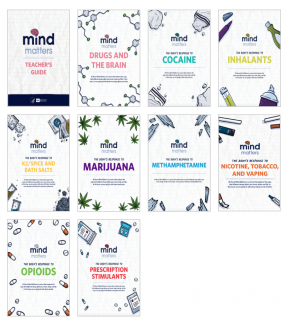
The National Institute on Drug Abuse (NIDA) has launched a redesigned series of booklets geared towards educating middle school students about substance use.
The Mind Matters series is a valued resource for tens of thousands of teachers...
NIDA/NIAAA Early Career Investigator Poster
Here, you can view the early career posters that were presented as part of the APA 2020 Virtual Convention.
You can view each poster by clicking the link next to the researcher's name.
ATTC Ukraine and Central Asia- Women and Substance Use Disorders Webinar
The effect of psychoactive substances on the human body has it’s gender differences. For example, alcohol dependence is a growing problem among women. Predisposition to alcoholism is higher in women primarily due to structural and...
ATTC Ukraine and Central Asia-Comorbidity of mood disorders and substance use disorders
Affective disorders, or mood disorders, are often diagnosed in people who use or are addicted to psychoactive substances. Symptoms of substance use disorder can mimic symptoms of both depression and mania. For example, acute alcohol...
International Consensus Statement for the Screening, Diagnosis, and Treatment of Adolescents with Concurrent Attention-Deficit/Hyperactivity Disorder and Substance Use Disorder
This international consensus statement can be used by clinicians and patients together in a shared decision-making process to select the best interventions and to reach optimal outcomes in adolescent patients with concurrent ADHD and SUD.
A Review of the Substance Use Disorder Treatment and Prevention Systems in Kenya
Researchers predict that harm from substance use and rates of substance use disorders in sub-Saharan Africa will increase significantly in the next 30 years.
In order to have a well-functioning health system that works in harmony, the...

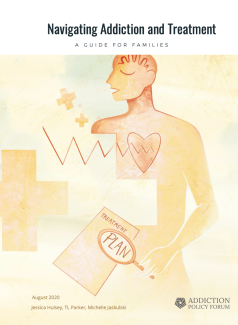
Navigating Addiction and Treatment A Guide for Families
About the Report
Navigating Addiction and Treatment: A Guide for Families is a resource for family members who are trying to navigate the complex world of addiction and help loved ones achieve recovery. The guide includes basic definitions...
Cruz Martín del Campo, S., León Parra, B. and Angulo Rosas, E.A. (2019). What you need to know about drugs. Mexico: Youth Integration Centers.
In 2013, under the convocation of the National Office of Drugs and Crime (UNODC), a group of experts in reducing the demand for drugs, several government institutions and civil society organizations met to develop the "Communicator's Guide...