


Search
Treatment Settings
Various treatment formats, either in a live-in facility or through regular visits to a clinic, are designed for ongoing support, to help maintain recovery, and to prevent relapse.

Alternatives to Conviction or Punishment Available for People Who Use Drugs
Substance/drug use disorders are multifactorial and biopsychosocial health disorders, associated with additional health problems, socio-economic inequalities, violence, criminal behaviour and social exclusion. In addition to the public...
Treatment of Drug Use Disorders and Associated Mental Health Disorders in Prison Settings and Forensic Hospitals
This discussion paper was prepared by UNODC following various requests from the Member States for technical assistance on the treatment of drug use disorders and associated mental health disorders in prison settings.
This effort is related...
Training on UTC 01 - Sri Lanka (Second Batch of Sri Lanka)
Preventive Education and Training Unit of National Dangerous Drugs Control Board - Sri Lanka has conducted training on Universal Treatment Curriculum, Course 01 (UTC 01) for 24 staff members in National Dangerous Drugs Control Board on 23rd...
Alcohol Use Disorder and its Treatment with Medications and Nutrition
ISSUP Kenya present their Webinar on Alcoholism and its Treatment with Medications and Nutrition.
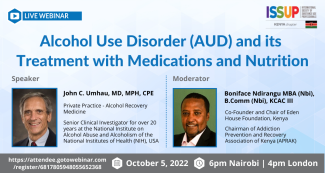
Challenges and Responses: Reaching out to those with Substance Use and Mental Health Problems
The theme of World Mental Health Day 2022 on 10th October is 'Make mental health and wellbeing for all a global priority'. To celebrate this worldwide activation, ISSUP UK, ISSUP Indonesia and ISSUP Pakistan are pleased to present a Webinar discussing challenges in reaching vulnerable populations and individuals experiencing substance use and mental health problems.
50 Pakistani substance use disorder treatment professionals successfully completed the UNODC Universal Treatment Curriculum (UTC) course 1-2 as part of the UNODC training programme on the UTC Basic Courses 1-8
|
|
 The United Nations Office on Drugs and Crime (UNODC) in collaboration with the Ministry of Narcotics Control, Ministry of National Health Services Regulation & Coordination and with support from Bureau of International...
Ecolink Institute starts advanced course on MI & CBT
Ecolink Institute of Well-being, an approved training provider of the Colombo Plan started the advanced course on Motivational Interviewing (MI) and Cognitive Behavioral Therapy (CBT) for addiction professionals on 12 September 2022.
Over...
Creating Persuasive Media Messages to Prevent Substance Misuse
ISSUP Lebanon present their Webinar on Using Media to Prevent Risky Substance Use.
Formal mindfulness practice predicts reductions in PTSD symptom severity following a mindfulness-based intervention for women with co-occurring PTSD and substance use disorder
Abstract
Background
Women with co-occurring posttraumatic stress disorder (PTSD) and substance use disorder (SUD) experience systemic barriers that place them in danger of poorer treatment outcomes. Some mindfulness-based interventions...
Report on Treatnet Training
Report on Treatnet Training organised by Bayelsa State Drug Abuse Prevention and Rehabilitation Committee (BADAPARC) in collaboration with the National Drug Law Enforcement Agency (NDLEA) for counselors in secondary and tertiary schools in...
The complexity and challenge of ‘dual diagnosis’
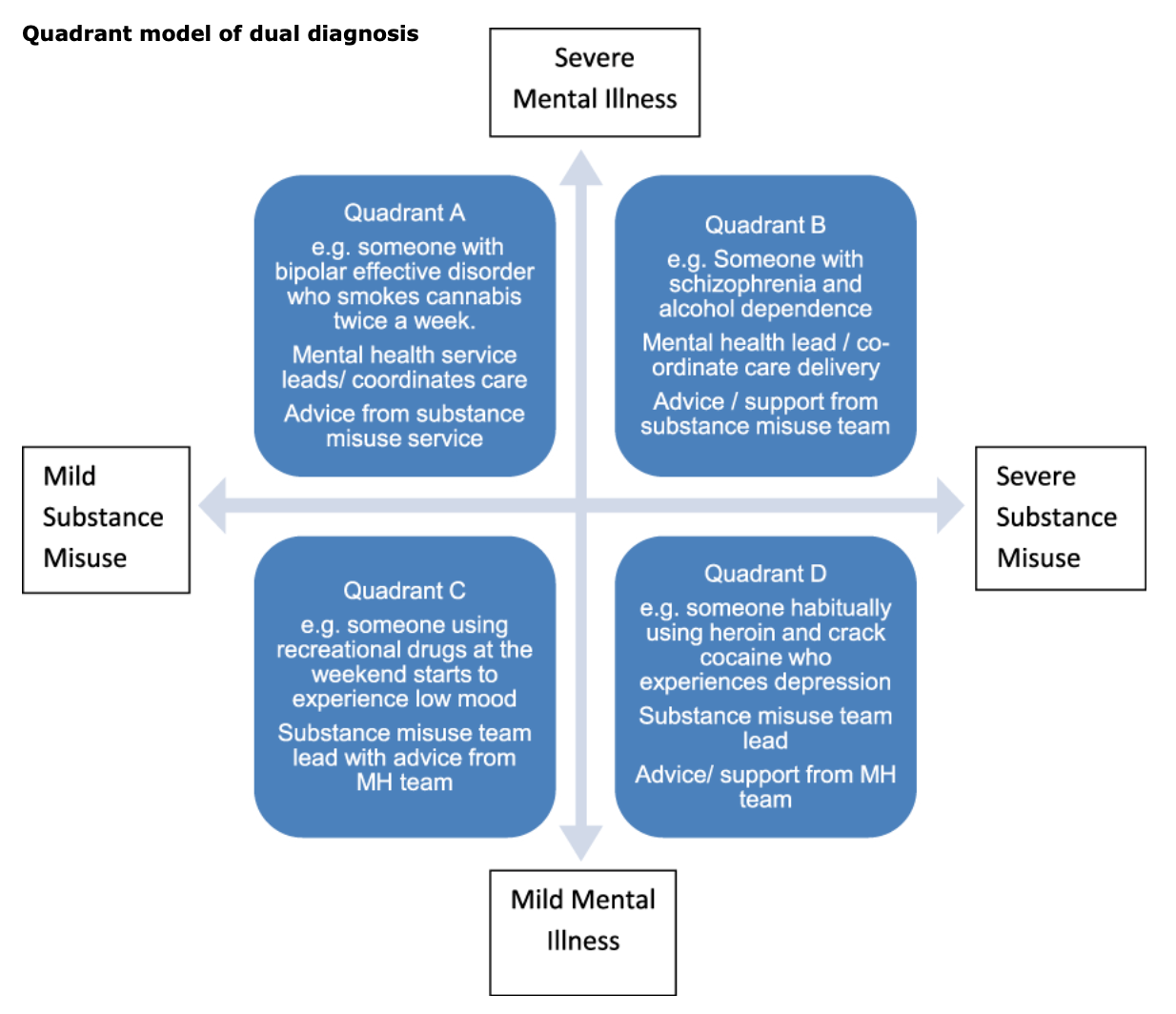
This Drug and Alcohol Finding publication addresses a hot topic which generates heated debate- dual diagnosis.
Whether to focus on mental health problems or substance use problems when the patient exhibits both is a long-standing...
Recovery is Possible: Defining Recovery in terms of abstinence-based treatment and Opioid substitution therapy
ISSUP South Africa are pleased to present their Webinar on Defining Recovery in terms of abstinence-based treatment and Opioid substitution therapy.
Bi-Monthly Webinar: ISSUP Nigeria Knowledge Update Series (Fourteenth Session)
ISSUP Nigeria are pleased to present their next Bi-Monthly Webinar in the Knowledge Update Series. This Webinar will centre on 'The Use of Methamphetamine in Nigeria: Trend and Threat Analysis'.
The Importance of Maintaining Boundaries Within Clinician/Client Relationships
For behavioral health providers, the effectiveness of clinical work is dependent upon the clinician/client relationship. When appropriate boundaries are not maintained, it is these same relationships that can be at the root of serious...
Introduction to Supervision of Peer Based Recovery Support Services
As many people know, the professional identity of peer staff is rooted in their lived experience and deep connection to personal vulnerabilities. What is not often talked about or addressed are the imbalances that many peers face in the...
Family Drug and Alcohol Courts in Northern Ireland (FDAC)
ISSUP UK are pleased to present their Webinar on the Family Drug and Alcohol Courts in Northern Ireland (FDAC).
Concurrent Treatment of PTSD and Substance Use Disorders Using Prolonged Exposure (COPE): Therapist Guide (Treatments That Work)
Concurrent Treatment of PTSD and Substance Use Disorders Using Prolonged Exposure (COPE) is a cognitive-behavioral psychotherapy program designed for patients who have posttraumatic stress disorder (PTSD) and a co-occurring alcohol or drug...
PTSD Consultation Program: Lecture Series
On the third Wednesday of each month, the PTSD Consultation Program hosts a webinar on a topic relevant to treating PTSD. Topics are selected based on questions providers are bringing to the PTSD Consultation Program and invite an expert in...
DESK REVIEW: Support for People with Substance Use Disorder in Ukraine During the War
Summary
War in Ukraine has inevitably led to the country's health system functioning at reduced capacity. Attacks near hospitals and active military operations force people to change their place of residence and flee from the war to safer...
Effects of a brief pre-admission telephone reminder on no-show and dropout rates in substance use disorder treatment: a quasi-experimental study
Background
Appointment no-show and early dropout from treatment represent major challenges in outpatient substance use disorder treatment, adversely affecting clinical outcomes and health care productivity. In this quasi-experimental...