


Search
Treatment Settings
Various treatment formats, either in a live-in facility or through regular visits to a clinic, are designed for ongoing support, to help maintain recovery, and to prevent relapse.

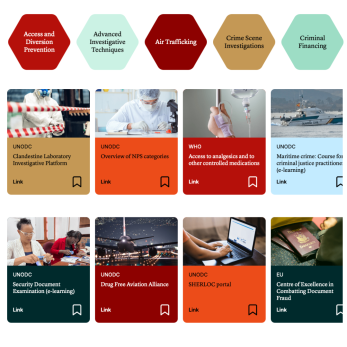
Exploring ISSUP’s Online Learning Hub
In conjunction with the launch of ISSUP’s Online Learning Hub, ISSUP, The Colombo Plan and CICAD are pleased to invite you to attend an introductory webinar.
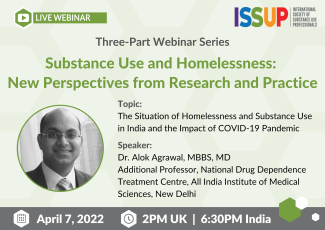
The Situation of Homelessness and Substance Use in India and the Impact of COVID-19 Pandemic
ISSUP are pleased to present the Final Event in the Webinar Series on Substance Use and Homelessness: New Perspectives from Research and Practice.
Ecolink Alumnis honor Global Trainers on Intl Women's Day
Ecolink Alumnis honor global trainers as outstanding Women of the Year on Women’s day.
Mangalore, India: Ecolink Alumni Association with over 200 students from 18 countries honored its Master trainers who trained over 250 addiction...

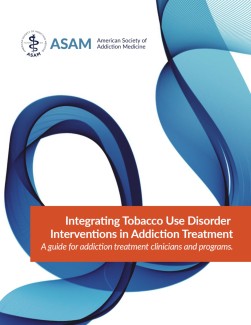
Integrating Tobacco Use Disorder Interventions in Addiction Treatment: A guide for addiction treatment clinicians and programs
Background
Between 65-87% of patients in addiction treatment smoke tobacco, compared to about 21% of the general population. These high rates of tobacco use contribute to significant patient suffering and early death. Over 53% of people...
Factors associated with retention on medications for opioid use disorder among a cohort of adults seeking treatment in the community
Abstract
Background
Medication treatment for opioid use disorder (OUD) (MOUD; buprenorphine and methadone) reduces opioid use and overdose. Discontinuation of MOUD can quickly lead to relapse, overdose and death. Few persons who initiate...
Sex Trafficking and Substance Use Identifying High-Priority Needs Within the Criminal Justice System
Substance use disorder (SUD) is common among victims of sex trafficking. Traffickers may exploit individuals' existing opioid use or other SUDs to coerce them into sex trafficking, or they may facilitate substance use to keep trafficking...
Effect of Combination Treatment With Varenicline and Nicotine Patch on Smoking Cessation Among Smokers Who Drink Heavily A Randomized Clinical Trial
Abstract
Importance The concurrent use of both tobacco and alcohol causes substantial disease and early mortality, and smokers who drink heavily tend to be less successful in smoking cessation than smokers who do not. Although varenicline...
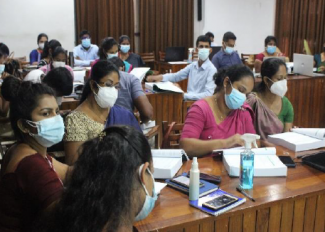
Final Evaluation Report of Capacity Building for Effective Implementation of UPC Core Course in NDDCB Preventive Staff, Sri Lanka
Report of the Universal Prevention Curriculum Core training conducted at NDDCB Auditorium on 7th, 8th, 9th, 10th and 11th February 2022.
People with tobacco use disorder exhibit more prefrontal activity during preparatory control but reduced anterior cingulate activity during reactive control
Abstract
Reduced inhibitory control and a hypersensitivity to reward are key deficits in drug dependents; however, they tend to be studied in isolation. Here, we seek to understand the neural processes underlying control over reward and...
Effects of family history of substance use disorder on reward processing in adolescents with and without attention-deficit/hyperactivity disorder
Abstract
Patients with attention-deficit/hyperactivity disorder (ADHD) often develop early onset substance use disorder (SUD) and show poor treatment outcomes. Both disorders show similar reward-processing alterations, but it is unclear...
Sulphated dehydroepiandrosterone serum levels are reduced in women with alcohol use disorder and correlate negatively with craving: A sex-separated cross-sectional and longitudinal study
Abstract
Previous studies have established a role of sex hormones in alcohol use disorder (AUD).Only few clinical investigations with low numbers of patients with AUD have focused on the sulphated form of dehydroepiandrosterone (DHEA-S)...
UTC-2 Training for Addiction Treatment Professionals of South Punjab, Pakistan.
“Training of Addiction Professionals for Pakistan Addiction Treatment Practitioners”
February 22-25, 2022 (8 am to 6pm)
Multan, Islamic Republic of Pakistan
- Description:
- Training Name: Training of Addiction Professionals for...
Law Enforcement in Prevention Programming
An APSI Prevention Talk on how to appropriately engage law enforcement in the implementation of evidence-based prevention strategies, with specific reference to the prevention of substance use.
Study of SARS-CoV-2 seroprevalence in patients undergoing treatment for addictions in Madrid
Summary
Background: Patients with addiction are a vulnerable group in which there is little data on the infection and severity of COVID-19. The objective of this study was to analyze the seroprevalence against SARS-CoV-2 in users in...
HealthCare educational differences in pain management, adverse childhood experiences and their relationship to substance use disorder education
The Ohio Attorney General selected experts from a number of academic fields to the Scientific Committee on Opioid Prevention and Education (SCOPE) to help the State of Ohio in tackling the opioid crisis in the United States. The focus of...
The prevalence of people who inject drugs among those with HIV late presentation: a meta-analysis
Early detection of Acquired Immune Deficiency Syndrome allows infected people to use prophylaxis against opportunistic infections and beginning immediate treatment for secondary complications. People who receive treatment benefit from...
The prevalence and pattern of cannabis use among patients attending a methadone treatment clinic in Nairobi, Kenya
Cannabis is the most widely used illegal substance in the world, with a global prevalence of 4% among people aged 15 to 64 years and a recent trend of growing use. Cannabis usage can have negative health consequences, such as impaired...
Staff preferences towards electronic data collection from a national take-home naloxone program: a cross-sectional study
In Norway, overdose mortality is over 260 per year, with opioids being implicated in the majority of cases. In 2014, the Norwegian government announced a government-funded nationwide overdose prevention initiative in response to the country...
Barriers to support for people experiencing problem substance use and homelessness: Reading list
The second webinar in our series on homelessness and substances use was presented by Dr Hannah Carver who focused on the different barriers that people experience when trying to access support and the evidence base for different...

An overview of global homelessness and strategies for systemic change
The Institute of Global Homelessness (IGH) drives a global movement to end street homelessness. Their vision is a world where everyone has a home that offers security, safety, autonomy, and opportunity.
This paper, published by IGH...