
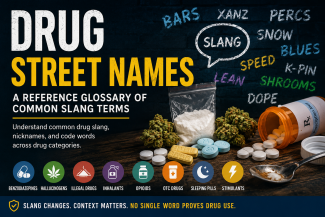
Drug Street Names: A Reference Glossary of Common Slang Terms
By Benjamin Zohar, NCACIP
Nationally Certified Advanced Clinical Intervention Professional
ISSUP New York Network Moderator | NAADAC Professional Member | CCAPP Individual Member
Last updated: July 2026
Key Summary
- Drug slang and street names change by region, age group, online community, and era.
- No single slang word, emoji, or phrase proves drug use or drug trafficking.
- Many street names overlap across different substances, especially opioids, benzodiazepines, stimulants, and cocaine.
- This glossary is intended for education, prevention, and treatment navigation, not diagnosis or law enforcement conclusions.
Almost every drug picks up informal names as it moves through communities, markets, schools, social media platforms, and online conversations. These street names shift by region, era, and social group, and many overlap because chemically similar substances tend to share nicknames.
This drug slang glossary is intended as an educational reference for parents, educators, clinicians, outreach workers, and anyone trying to make sense of unfamiliar language. Recognizing a term is only a starting point. A single word, nickname, emoji, or phrase does not confirm that a person is using or selling drugs. Meaning always depends on context.
If you or someone close to you may be struggling with substance use, understanding the vocabulary is far less important than reaching out for help. Slang can help you notice a warning sign, but it is never a substitute for an honest conversation or a professional assessment.
Jump to Drug Street Names by Category
- Benzodiazepines
- Hallucinogens
- Illegal Drugs
- Inhalants
- Opioids
- Over-the-Counter Drugs
- Sleeping Pills
- Stimulants
- Why Street Names Matter
- Frequently Asked Questions
- References
Important note: Street names differ by country, region, age group, and online community. Many slang terms overlap across multiple substances, so no single word confirms what drug someone is referring to. Use this glossary as a general educational tool, not as proof of drug use.
Benzodiazepines: Common Street Names and Slang
Benzodiazepines are central nervous system depressants prescribed for anxiety, insomnia, panic disorders, and seizures. As a class, they are sometimes called bars, benzos, blues, chill pills, downers, nerve pills, planks, tranks, or zannies. Misuse can be especially dangerous when benzodiazepines are combined with alcohol, opioids, or other sedating substances.
| Brand Name | Generic Name | Common Street Names | Notes |
|---|---|---|---|
| Ativan | Lorazepam | candy, downers, sleeping pills, tranks | Prescription benzodiazepine sometimes misused for sedation. |
| Halcion | Triazolam | candy, downers, sleeping pills, tranks | Short-acting sedative-hypnotic benzodiazepine. |
| Klonopin | Clonazepam | k, k-pin, pin, super valium | Often discussed in relation to anxiety, seizures, and misuse. |
| Librium | Chlordiazepoxide | candy, downers, sleeping pills, tranks | Older benzodiazepine sometimes used in alcohol withdrawal care. |
| Rohypnol | Flunitrazepam | forget-me pill, la rocha, lunch money, mind eraser, roofies | Known for strong sedation and drug-facilitated assault concerns. |
| Valium | Diazepam | eggs, jellies, moggies, vallies | Longer-acting benzodiazepine with misuse and dependence risks. |
| Xanax | Alprazolam | bars, footballs, french fries, ladders, school bus, xan, xannies, z-bars | One of the most commonly recognized benzodiazepines in drug slang. |
What Do People Mean by “Xanax Bars”?
The phrase Xanax bars usually refers to rectangular alprazolam tablets, most commonly associated with 2 mg doses. In street language, “bars” may also be used loosely for counterfeit pills sold as Xanax. For a deeper look at alprazolam tablets, see this guide to Xanax bars, colors, slang, risks, and treatment.
When people search for slang names for Xanax, they may be trying to understand terms such as bars, school buses, z-bars, footballs, or xannies. These names can vary by color, tablet shape, manufacturer, and local use.
Hallucinogens: Psychedelic and Dissociative Drug Slang
Hallucinogens are psychoactive substances that alter mood, perception, thought, and a person’s sense of reality. This category includes classic psychedelics, dissociatives, and several plant- and lab-derived compounds. Some substances listed here are used in traditional, ceremonial, or clinical research contexts, while others are commonly associated with recreational misuse.
| Substance | Drug Type | Common Street Names | Notes |
|---|---|---|---|
| Ayahuasca | Psychedelic brew | aya, hoasca, yagé | Plant-based brew associated with DMT-containing preparations. |
| DMT | Psychedelic | dimitri, the spirit molecule | Powerful short-acting psychedelic compound. |
| GHB | Depressant | g, geeb, georgia home boy, grievous bodily harm, liquid e | Can cause dangerous sedation, memory loss, and overdose. |
| Ketamine | Dissociative anesthetic | cat valium, green, jet, k, k-hole, special k, super acid, vitamin k | Used medically but also misused for dissociative effects. |
| Kratom | Botanical opioid-like substance | biak-biak, herbal speedball, ithang, kahyam, ketum, thom | Effects vary by dose and product concentration. |
| LSD | Classic psychedelic | acid, blotter, dots, sugar cubes, yellow sunshine | Often sold on blotter paper or small tabs. |
| Psilocybin Mushrooms | Classic psychedelic | boomers, caps, magic mushrooms, mushies, shrooms | Commonly associated with naturally occurring psychedelic mushrooms. |
| Synthetic Cathinones | Synthetic stimulant | bath salts, bliss, cloud nine, flakka, lunar wave, vanilla sky, white lightning | Often marketed deceptively and linked with severe stimulant toxicity. |
Why Hallucinogen Slang Can Be Confusing
Hallucinogen slang is often confusing because the same term may refer to a plant, a lab-made drug, a preparation method, or a specific form of sale. Online communities may also create new terms that do not appear in older drug education materials.
Kratom-related slang can be especially confusing because traditional kratom leaf, kratom extracts, and concentrated 7-hydroxymitragynine products are not the same. For kratom and opioid-treatment context, read whether Suboxone helps with kratom dependence. For concentrated alkaloid products, see buying 7-OH online and the risks of concentrated 7-hydroxymitragynine.
Illegal Drugs and Common Street Names
Illicit drugs are manufactured, sold, and used outside the law. Because unregulated drug supplies can vary widely in purity and toxicity, adulteration is a major concern. Fentanyl, xylazine, synthetic opioids, and other unexpected substances may appear in powders, pills, and counterfeit products.
| Common Name | Drug Type | Common Street Names | Notes |
|---|---|---|---|
| Black Tar Heroin | Opioid | chiva, mexican black tar, mexican tar | Dark sticky form of heroin associated with injection and smoking. |
| Cocaine | Stimulant | blow, charlie, coca, coke, powder, snow, stardust, white girl | Powder cocaine has many regional and online nicknames. |
| Cocaine with Heroin | Stimulant-opioid combination | speedball | Combination can increase overdose risk due to opposing drug effects. |
| Crack Cocaine | Stimulant | dice, hail, moon rocks, nuggets, rock, sleet, sugar block, trey | Smokeable base form of cocaine. |
| Heroin | Opioid | black pearl, brown sugar, china white, dope, dragon, h, horse, junk, smack | Street supply may contain fentanyl or other synthetic opioids. |
| Marijuana* | Cannabinoid | 420, bud, chronic, dope, flower, ganja, grass, herb, mary jane, pot, reefer, weed | Legal status varies widely by state, country, and use context. |
*Marijuana’s legal status varies widely by jurisdiction and it is not universally classified as illicit, given its medical use and evolving state laws.
Why Cocaine Has So Many Street Names
Cocaine street names often come from appearance, effects, geography, packaging, or pop-culture references. Words such as snow, powder, and white girl usually refer to powder cocaine, while rock is commonly associated with crack cocaine. For cocaine-specific coded language, read more about cocaine emoji meanings and drug-related codes.
People may also use emojis or coded phrases online when discussing cocaine or other illegal drugs. Even then, context matters. A snowflake emoji, key emoji, or diamond emoji may be innocent in one conversation and drug-related in another.
Inhalants: Street Names and Common Terms
Inhalants are volatile vapors and gases misused for a brief, mind-altering high. Many are ordinary household, automotive, or commercial products, which makes them especially accessible. Inhalant misuse can be medically dangerous and may cause sudden serious harm even after short-term use.
| Chemical Compound | Drug Type | Common Street Names | Notes |
|---|---|---|---|
| Amyl Nitrite | Inhalant | ames, amies, pearls, poppers | Often grouped with nitrite inhalants. |
| Isobutyl Nitrite | Inhalant | bolt, bullet, climax, locker room, poppers, quicksilver, rush, snappers, thrust | Sometimes sold under deceptive product names. |
| Nitrous Oxide | Dissociative gas | buzz bomb, hippie crack, laughing gas, whippets | Used medically but misused recreationally from cartridges or tanks. |
Why Inhalant Slang Is Often Product-Based
Inhalant slang often comes from the container, product type, or method of use rather than the chemical name. For example, “whippets” usually refers to nitrous oxide cartridges, while “poppers” is a broad slang term for nitrite inhalants.
Opioids: Prescription and Illegal Opioid Street Names
Opioids are potent pain-relieving drugs that carry a high potential for dependence, respiratory depression, and overdose. They include prescription medications, illicitly manufactured fentanyl, heroin, and counterfeit pills sold as legitimate medication. Many opioid slang terms overlap across prescription pills, heroin, fentanyl, and counterfeit tablets.
| Generic Name | Brand Name | Common Street Names | Notes |
|---|---|---|---|
| Buprenorphine | Suboxone, Subutex | big whites, oranges, small whites, sobos, stops, strips, sub, subs | Medication used to treat opioid use disorder; also diverted in some settings. |
| Codeine | Various | captain cody, cody, little c, schoolboy | Prescription opioid sometimes misused alone or in cough syrups. |
| Codeine with Promethazine | Various cough syrups | lean, purple drank, sizzurp, texas tea | Combination can cause dangerous sedation and breathing problems. |
| Fentanyl | Actiq, Sublimaze | apache, china girl, china white, dance fever, friend, goodfella, jackpot, tango and cash, TNT | Highly potent synthetic opioid linked to overdose deaths. |
| Oxycodone | OxyContin | 512s, berries, blues, hillbilly heroin, oxy, oxycotton, percs, roxy | Common prescription opioid frequently counterfeited or diverted. |
| Tramadol | Ultram | chill pills, trammies, ultras | Opioid-like pain medication with dependence and seizure risks. |
Why Opioid Slang Can Be Dangerous to Misread
Opioid slang can be especially risky because the drug supply has changed. A person may think they are buying an oxycodone pill, Xanax bar, or heroin, but the product may contain fentanyl or another synthetic opioid. Terms such as blues, percs, china white, or dope may not reliably identify what is actually inside the product.
If overdose is suspected, call emergency services immediately. Naloxone can reverse opioid overdose and should be given when opioid overdose is possible, even if the exact substance is unknown. For overdose geography and public-health context, see where overdose death rates are highest in the US.
Over-the-Counter Drugs: Slang and Misuse Terms
Over-the-counter drugs are available without a prescription and are generally safe when used as directed, but several are misused at high doses for intoxicating or dissociative effects. OTC misuse can still cause serious medical problems, including confusion, agitation, heart problems, liver injury, and overdose.
| Drug Name | Drug Type | Common Street Names | Notes |
|---|---|---|---|
| Dextromethorphan | Cough suppressant | dex, dextro, poor man’s ecstasy, robo, robotripping, triple c, tussin | Also known as DXM; misused at high doses for dissociative effects. |
| Dimenhydrinate | Motion sickness medication | dime, dime tabs, substance d | High-dose misuse can cause delirium and dangerous side effects. |
| Pseudoephedrine | Decongestant | precursor-related slang varies | Often diverted as a methamphetamine precursor rather than used for a slang-named high. |
Can OTC Drugs Be Addictive or Dangerous?
Yes. Although OTC medications are legal and widely available, misuse can be dangerous. Dextromethorphan, diphenhydramine-containing sleep aids, and motion sickness medications may be taken in unsafe amounts for intoxication. For OTC sleep-aid risks, see ZzzQuil and alcohol risks, side effects, and why mixing them can be dangerous.
Sleeping Pills and Sedative-Hypnotic Street Names
Sleeping pills are sedative-hypnotics prescribed for insomnia. Some carry misuse potential and share nicknames with benzodiazepines and barbiturates. Slang for sleeping pills often focuses on memory loss, sedation, or pill appearance.
| Drug Name | Drug Type | Common Street Names | Notes |
|---|---|---|---|
| Ambien, Lunesta, Sonata | Sedative-hypnotic | forget-me pill, mexican valium, r2, roche, rope, tic-tacs, zombie pills | Sleep medications may cause memory gaps or unusual behaviors. |
| Amytal | Barbiturate | barbs, red birds, reds, yellow jackets, yellows | Barbiturates have high overdose risk, especially with alcohol or opioids. |
Why Sleeping Pills Share Slang With Other Depressants
Sleeping pills, benzodiazepines, barbiturates, and alcohol all affect sedation and impairment. Because of this, slang terms such as downers, zombie pills, or forget-me pills may be used loosely across different depressant drugs. This overlap is one reason slang should never be treated as a precise drug identification tool.
Prescription and Illicit Stimulants: Common Street Names
Stimulants increase brain activity, heightening alertness, attention, energy, and wakefulness. This category includes prescription medications for ADHD, performance-enhancing drugs, and illicit stimulants. Misuse can lead to anxiety, insomnia, elevated heart rate, paranoia, and dependence.
| Drug Type | Brand / Generic | Common Street Names | Notes |
|---|---|---|---|
| Amphetamine | Adderall, Dexedrine | addies, bennies, black beauties, crosses, hearts, speed, truck drivers, uppers | Prescription stimulant commonly misused for studying, work, or energy. |
| Antidepressants | Paxil, Prozac, Zoloft | bottled smiles, happy pill, wonder drug | Not classic stimulants, but sometimes discussed in mood-related slang. |
| Diet Pills | Phentermine, Adipex | crank, fastin, fen-phen, speed | Some weight-loss medications have stimulant-like effects. |
| Methylphenidate | Concerta, Ritalin | kibbles and bits, mph, pineapple, r-ball, skippy, smart drug, vitamin r | ADHD medication sometimes diverted or misused. |
| Anabolic Steroids | Nandrolone, Testosterone | arnolds, gym candy, juice, pumpers, roids, stackers, weight gainers | Not stimulants, but often grouped with performance-enhancing drug slang. |
What Are Common Slang Names for Adderall and ADHD Stimulants?
Common slang names for Adderall and prescription stimulants include addies, speed, uppers, study drugs, smart drugs, and truck drivers. For stimulant-related risks, see how long Adderall lasts, including IR vs. XR and common questions.
Prescription stimulant misuse can be risky even when the medication is legal for someone else. For broader ADHD medication access and overdose concerns, read how the ADHD medication shortage is fueling a hidden overdose crisis.
Why Street Names Matter — and Where They Fall Short
Slang exists in part to keep outsiders out. The same instinct that produces coded language can also drive concealment, which is why an unfamiliar term can occasionally be an early signal worth paying attention to. But the value of a glossary like this is limited. Terms are recycled across unrelated drugs, invented locally, and abandoned as quickly as they appear.
What matters far more than vocabulary is the pattern of behavior around it. Warning signs may include secrecy, sudden changes in sleep, unexplained money problems, missing medication, intoxication, isolation, risky behavior, or repeated conflict at home, school, or work.
If you are worried about someone, treat slang as one small clue among many. The next step is not accusation. The next step is a calm conversation, practical support, and, when needed, guidance from a qualified treatment or intervention professional.
When to Seek Help
Consider reaching out for professional support if drug-related language appears alongside behavioral changes, worsening mental health, overdose risk, withdrawal symptoms, unsafe mixing of substances, or inability to stop despite consequences. A professional assessment can help determine whether detox, outpatient care, residential treatment, medication-assisted treatment, therapy, or family intervention support may be appropriate.
If someone is unconscious, struggling to breathe, turning blue or gray, making gurgling sounds, or cannot be awakened, call emergency services immediately. If opioid overdose is possible, give naloxone if available.
Frequently Asked Questions About Drug Street Names
What are street names for drugs?
Street names for drugs are informal nicknames, slang terms, code words, or shorthand phrases used to refer to substances. They may come from a drug’s appearance, effects, packaging, origin, brand name, or online culture.
Why do drug slang terms change?
Drug slang changes because communities, markets, and online platforms change. Some terms are created to avoid detection, while others spread through music, social media, local culture, or peer groups.
Can one slang word mean multiple drugs?
Yes. Many slang words overlap. For example, “blues” may refer to certain opioid pills, counterfeit pills, or other blue tablets depending on context. “Downers” may refer broadly to benzodiazepines, sleeping pills, alcohol, or other sedatives.
Do emojis have the same meaning as drug slang?
Sometimes, but not always. Emojis may be used as coded language in drug-related conversations, but they also have many innocent meanings. A snowflake emoji, pill emoji, key emoji, or plug emoji does not prove drug use or sales without surrounding context.
Can slang identify drug use?
No. Slang alone cannot identify drug use. It may be a reason to pay attention, ask questions, or look for other warning signs, but it should not be treated as proof. Behavior, context, and professional assessment matter more than a single word.
What should I do if I find drug slang in a text message?
Stay calm and look at the bigger picture. Consider the full conversation, the person’s behavior, recent changes, and safety risks. If you are concerned about substance use, start with a direct but nonjudgmental conversation. If there is overdose risk or immediate danger, seek emergency help.
References
- U.S. Drug Enforcement Administration. Drug Slang Code Words.
- U.S. Drug Enforcement Administration. Slang Terms and Code Words: A Reference for Law Enforcement Personnel.
- U.S. Drug Enforcement Administration. Drugs of Abuse: A DEA Resource Guide.
- National Institute on Drug Abuse. Commonly Used Drugs Charts. National Institutes of Health.
- Substance Abuse and Mental Health Services Administration. Find Help and Treatment Resources.
- Centers for Disease Control and Prevention. Overdose Prevention.
- U.S. Food and Drug Administration. Information on Counterfeit Medicine and Drug Safety.
About the author: Benjamin Zohar, NCACIP, is a Nationally Certified Advanced Clinical Intervention Professional who publishes educational resources on substance use, intervention, family support, and treatment navigation.
This article is for educational and informational purposes only and does not constitute medical advice, diagnosis, legal advice, or proof of substance use. If you or a loved one may be struggling with substance use, consult a qualified professional. In an emergency or suspected overdose, call emergency services immediately.