The range of medical, psychological, and social services designed to help individuals reduce or stop substance use and manage substance use disorders. Treatment may include assessment, counselling and behavioural therapies, medication-assisted treatment, withdrawal management, and support for co-occurring mental or physical health conditions. Effective treatment is typically person-centred and evidence-informed, and may be provided in outpatient, community, or residential settings. Treatment aims to improve health and functioning, reduce substance-related harms, and support individuals in moving toward recovery and long-term wellbeing.

Treatment
World “NO Tobacco Day”, Youth of Allied Health Sciences Presented A Variety Of Projects At The University Of Lahore
On May 31, 2022, the world celebrates “NO Tobacco Day”. To honor this day, many events take place every year. The effects of smoking tobacco and the millions of deaths that take place, as a result, are widely known. Cancer, stroke...
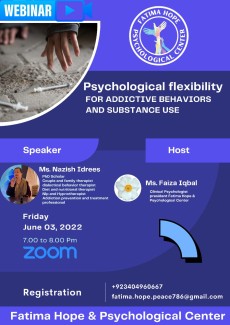
Webinar on psychological flexibility for addictive behaviours
On June 3 Friday evening, 2022, a webinar was held to educate youth, students and professionals about a new clinical construct called Psychological Flexibility. The importance of this ability was elaborated in the context of managing...
Addiction Severity Index (ASI) Assessment Interview Learning Video (Part III).
ASI Interview Part III This video is intended as a learning tool for practicing assessment interview skills by using ASI adapted from UTC on course 5: Intake, Screening Assessment, Treatment Plan, and Documentation for Addiction...
The influence of poly-drug use patterns on the association between opioid agonist treatment engagement and injecting initiation assistance
Abstract Background Evidence suggests people who inject drugs (PWID) prescribed opioid agonist treatment (OAT) are less likely to provide injection drug use (IDU) initiation assistance. We investigated the association between OAT engagement...
Anticancer effects of disulfiram: a systematic review of in vitro, animal, and human studies
Abstract Background and objectives Cancer morbidity and mortality rates remain high, and thus, at present, considerable efforts are focused on finding drugs with higher sensitivity against tumor cells and fewer side effects. Disulfiram (DSF...
Modeling the evolution of the US opioid crisis for national policy development
Abstract The opioid crisis is a major public health challenge in the United States, killing about 70,000 people in 2020 alone. Long delays and feedbacks between policy actions and their effects on drug-use behavior create dynamic complexity...
Grants for private drug treatment and rehabilitation centers in Bangladesh
To improve the quality of drug treatment and rehabilitation services, for the third time, the Government of Bangladesh has provided grants to private drug treatment and rehabilitation centers across the country. Moreover, the government has...
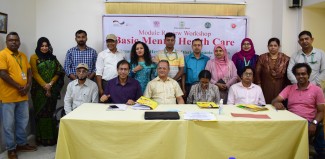
Drug treatment management and mental health care training manual review workshop held
Proper guidelines for professionals are essential in providing quality services. With this in mind, Dhaka Ahsania Mission Health Sector organized a day-long consultation workshop on June 2, 2022, under the JPRPHRPC project supported by GIZ...
Comparison of Medical Cannabis Use Reported on a Confidential Survey vs Documented in the Electronic Health Record Among Primary Care Patients
Abstract Importance Patients who use cannabis for medical reasons may benefit from discussions with clinicians about health risks of cannabis and evidence-based treatment alternatives. However, little is known about the prevalence of...
Association Between Smoking History and Overall Survival in Patients Receiving Pembrolizumab for First-Line Treatment of Advanced Non–Small Cell Lung Cancer
Abstract Importance There is a need to tailor treatments to patients who are most likely to derive the greatest benefit from them to improve patient outcomes and enhance cost-effectiveness of cancer therapies. Objective To compare overall...