Legal and illegal psychoactive compounds that alter brain function, leading to changes in perception, mood, consciousness, and behaviour.

Psychoactive Substances
From Parenting to Polysubstance Use: The Role of Attachment and Psychosocial Mechanisms in Addiction Vulnerability
Background: Polysubstance use disorder (PSUD) in adolescents and young adults is often rooted in early family dynamics. Baumrind’s typology—later extended by Maccoby & Martin and the integrative model of Darling & Steinberg—offers a...
Day 2, 16:00 - 17:00, Plenary 11: New Psychoactive Substances and Opioids
Panel Presented at Indonesia 2025 on the 18th of September 2025 Moderator: Goodman Sibeko Presentations: Ruzmayuddin Mamat: Prevalence of Psilocybin Use in Vaping and Associated Factors: A Study among Amphetamine-type Stimulants (ATS) Use...
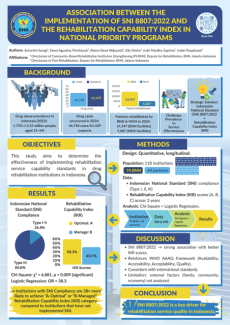
ASSOCIATION BETWEEN THE IMPLEMENTATION OF SNI 8807:2022 AND THE REHABILITATION CAPABILITY INDEX IN NATIONAL PRIORITY PROGRAMS
Background: In 2023, the prevalence of drug abuse in Indonesia among the population aged 15–64 years reached 1.73%, equivalent to 3.33 million people. This problem has prompted The National Narcotics Board (BNN) as a government agency which...
New Psychoactive Substances: Finding and Legal Challenges in Indonesia
This presentation was featured at Indonesia 2025, on the 18.09.2025. Authors: Supiyanto 1 and Tanti 2 1 Chief of The Center of Narcotics Laboratory, National Narcotics Board of The Republic of Indonesia 2 Research Team Leader, Center of...
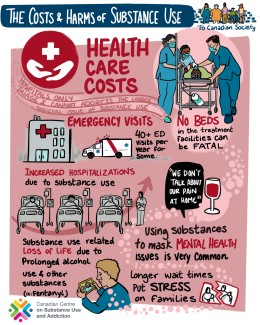
Personal Impacts of Substance Use
The Canadian Centre on Substance Use and Addiction (CCSA) transforms complex data into insights that reflect real human experiences. Every aspect of the Canadian Substance Use Cost and Harms (CSUCH) project represents individuals with lived...
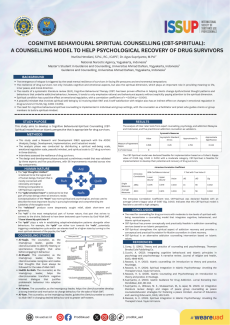
Cognitive Behavioural-Spiritual Counselling Model (CBT-Spiritual) in Resiliency Enhancement for People with Substance Abuse Disorder
Drug abuse is increasingly concerning, requiring a rehabilitative approach through effective counselling by the Indonesian Government by strengthening drug prevention and eradication, because drug abuse in Indonesia is increasingly...
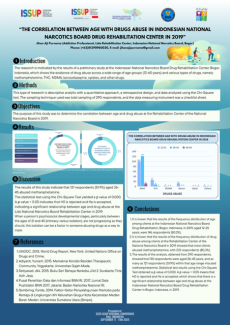
The Correlation Between Age With Drugs Abuse In Rehabilitation Center Of National Narcotics Board Lido 2019
The research is motivated by the results of a preliminary study at the Rehabilitation Center of National Narcotics Board Lido which shows the existence of drug abuse with a wide range of age groups at the age of 12-60 years and various...
Developing a Holistic and Inclusive Competency Framework for the Addiction Workforce: Insights from a Transdisciplinary Team of Addiction Professionals
INTRODUCTION: The addiction workforce encompasses a diverse group of professionals across various sectors, such as prevention, harm reduction, treatment, and recovery. Training for this workforce is highly variable both at local and...
Clinical Outcomes and Healthcare Perspectives on Adolescent Kratom Use in the Czech Republic: A Study Protocol
ABSTRACT: Kratom (Mitragyna speciosa), a plant native to Southeast Asia, has gained global popularity due to both its dose-dependent stimulant and sedative effects. This has raised concerns, particularly around adolescent use, as regular...
Selected Cognitive Functions and Activities of Daily Living in Patients with Prescription Drug Use Disorders
BACKGROUND: Prescription drug use disorders are increasingly becoming a reason for people contacting addiction services. The onset is often slow and not obvious. People can be very good at hiding the problem from their social environment...