
Search
 Treatment
The range of medical, psychological, and social services designed to help individuals reduce or stop substance use and manage substance use disorders. Treatment may include assessment, counselling and behavioural therapies, medication-assisted treatment, withdrawal management, and support for co-occurring mental or physical health conditions. Effective treatment is typically person-centred and evidence-informed, and may be provided in outpatient, community, or residential settings. Treatment aims to improve health and functioning, reduce substance-related harms, and support individuals in moving toward recovery and long-term wellbeing.


Presented papers in International Conference on Substance Use Disorders
Abstract
Background: Meaning in life has been associated with positive mental health. However, previous findings are mixed regarding how the meaning in life (i.e., presence & search) is associated with mental health issues such as...

New European mini guides on responding to drug use in specific settings by EMCDDA
Focusing treatments on specific settings where problems may develop is an important approach to implementing health and social responses to drug problems. As a result, the EMCDDA's Health and social solutions to drug problems: a European...

Prevention toolkit — a new one-stop shop for EMCDDA prevention materials
The EMCDDA launched a new Prevention toolkit, bringing together all of its key prevention-related materials to date. Part of the agency’s toolkit series, this new resource is aimed at anyone involved in shaping decisions, opinions and...
Frequency and severity of irritable bowel syndrome in cigarette smokers, Turkey 2019
ABSTRACT
Introduction:
Cigarette smoking has recently been associated with several gastrointestinal symptoms, and smoking cessation has been recommended as a lifestyle change strategy for irritable bowel syndrome (IBS). This study assessed...
Treatment outcome and readmission risk among women in women-only versus mixed-gender drug treatment programs in Chile
Abstract
Introduction
Traditional treatment programs for substance use disorder (SUD) tend to be male-dominated environments, which can negatively affect women's access to treatment and related outcomes. Women's specific treatment needs...
Bi-Monthly Webinar: ISSUP Nigeria Knowledge Update Series (Eleventh Session)
ISSUP Nigeria would like to present the next Bi-monthly webinar in their Knowledge Update Series.
Exploring ISSUP’s Online Learning Hub
In conjunction with the launch of ISSUP’s Online Learning Hub, ISSUP, The Colombo Plan and CICAD are pleased to invite you to attend an introductory webinar.
Development and Implementation of Prevention Programs with Youth
ISSUP Lebanon present their webinar on delivering prevention programs to adolescents and youth.
www.drughelp.eu
Drughelp is a service for people who use drugs and hope to get a better understanding of the possible harms their drug use may bring about.
The service has been developed by a group of experts working in the field of treatment and harm...
UNODC Trains Team of National Trainers from Central Asia within the Advanced Level of the Universal Treatment Curriculum for Substance Use Disorders
The UNODC Regional Office for Central Asia supported a training of trainers (ToT) on Course 13 – “Contingency Management: A Reinforcement Based Treatment” and “Course 18 – “Clinical Supervision” which took place in person in Bishkek...

Fetal Alcohol Spectrum Disorders: Awareness to Insight in Just 50 Years
Abstract
This article is part of a Festschrift commemorating the 50th anniversary of the National Institute on Alcohol Abuse and Alcoholism (NIAAA). Established in 1970, first as part of the National Institute of Mental Health and later as...
Navigating intersecting public health crises: a qualitative study of people with opioid use disorders' experiences during the COVID-19 pandemic
Background
The long-running opioid epidemic and the more recent COVID-19 pandemic are two interrelated events with major public health implications for people who use opioids (OUD). The majority of studies on the interaction of these two...
Effects of extended-release buprenorphine treatment for opioid dependence
In this webinar, findings were reported from the CoLAB qualitative study, which aimed to examine the multiple social, material and temporal effects of extended-release buprenorphine depot (BUP-XR) treatment in clients’ lives, among a group...
Workforce Wellbeing in Crisis Response - Learning from an NHS service following the Grenfell Tower Fire 2017
ISSUP UK are pleased to present their Webinar on Workforce Wellbeing in Crisis Response.
ISSUP The Gambia Launch
ISSUP The Gambia would are pleased to present their launch event followed by a webinar on Community Resilience in Substance Use.
Association Between Workplace Absenteeism and Alcohol Use Disorder From the National Survey on Drug Use and Health, 2015-2019
Abstract
Importance Alcohol use disorder (AUD) is common and associated with increased morbidity. The degree to which AUD currently factors into workplace absenteeism needs further characterization in the US.
Objective To examine the...
Mental Health Treatment Seeking and History of Suicidal Thoughts Among Suicide Decedents by Mechanism, 2003-2018
Abstract
Importance Understanding mental health and substance use treatment seeking and suicidality among suicide decedents is important to determine prevention efforts.
Objective To evaluate differences in treatment seeking and...
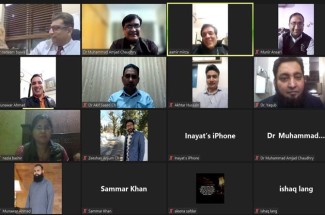
Training on UTC 02 by ITRAMIC Foundation Lahore
In order to endorse the evidence-based practices in the field of addiction treatment in Pakistan, ITRAMIC Foundation Lahore organized virtual training for treatment staff and professionals from 19th to 28th February 2022. The training was...