

Search
 Treatment
The range of medical, psychological, and social services designed to help individuals reduce or stop substance use and manage substance use disorders. Treatment may include assessment, counselling and behavioural therapies, medication-assisted treatment, withdrawal management, and support for co-occurring mental or physical health conditions. Effective treatment is typically person-centred and evidence-informed, and may be provided in outpatient, community, or residential settings. Treatment aims to improve health and functioning, reduce substance-related harms, and support individuals in moving toward recovery and long-term wellbeing.


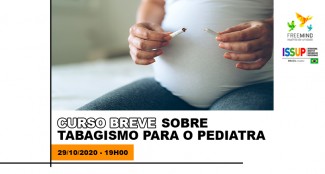
Brief Course on Smoking for pediatricians
Dr. João Paulo Becker Lotufo, friend and partner of Freemind and ISSUP Brazil, invitesyou to participate in the Brief Course on Smoking for pediatricians during the II Day of the Working Group of Alcohol and Drugs of the Brazilian Society...
Substance Misuse in Older People: an Information Guide
This guide, published by the Royal College of Psychiatrists, provides an in depth account of treatment of substance misuse among older adults.
Contents
Part 1
Initial assessment of substance misuse in older people
Psychosocial...
Substance Use in Older Adults Resources
Substance use disorder (SUD) is a growing issue in adults aged 65 and older in the United States. Older adults are more likely to take prescription medications and experience chronic health problems associated with aging, including chronic...

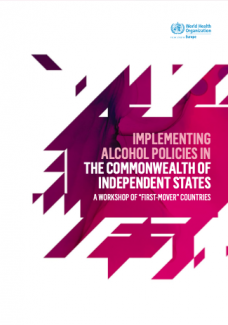
European and central Asian Countries Lead the Way in Cost-effective Alcohol Policies
A new report published by the World Health Organisation presents the Commonwealth of Independent States (CIS) countries – Armenia, Azerbaijan, Belarus, Kazakhstan, Kyrgyzstan, the Republic of Moldova, the Russian Federation, Tajikistan...
Webinar | Family Skills for Prevention of Substance Use, Mental Health and Violence and for Development, including under COVID-19
On November 11th 2020, ISSUP Lebanon presented their Webinar on Prevention through Family Skills.
The Talker in Talking Therapies. Effectiveness Bank Alcohol Treatment Matrix Cell B4
THE TALKER IN TALKING THERAPIES
Key studies on the impact of the practitioner in psychosocial therapies for alcohol dependence. Structured around Carl Rogers’ classic account of the “necessary and sufficient conditions” for effective...
Child Art: The Intersection of Art and Neuroscience
NIDA has worked with the International Child Art Foundation on their current issue of ChildArt which focuses on brain development and child health. It features the National Institutes of Health (NIH) Adolescent Brain Cognitive Development...
The Ministry of Health of Senegal Celebrates World Mental Health Day with the Support of UNODC and Partners
The Ministry of Health of Senegal and UNODC mark World Mental Health Day
This year, World Mental Health Day was celebrated across the world on October 10th, 2020. It comes at a time when billions of people around the globe have been...

Substance use Among Older Adults- SSA Factsheet
This factsheet reviews the special problems relating to the detection and treatment of older people with a history of substance misuse and those who are still using substances.
The fact sheet includes a selection of case studies, example...
Webinar | Psychotherapy of Substance Use Disorders
On Wednesday 28th October, ISSUP Ukraine and ISSUP Kazakhstan presented their Webinar on 'Psychotherapy of Substance Use Disorders'.
Physicians who are dedicated to the prevention and treatment of the use of SPA
The misuse of licit and illicit drugs is a serious public health problem that affects all countries in the world in a worrying way. It is estimated that between 2005 and 2006, approximately 200 million individuals have consumed illicit...
The Common Core of Effective Therapies. Highlight from Effectiveness Bank Alcohol Treatment Matrix Cell A4
THE COMMON CORE OF EFFECTIVE THERAPIES
Starting point in last week’s exploration of psychosocial therapies was 2018’s “impressively wise overview” of research on ‘common factors’ they share from a task force with the authority of the...
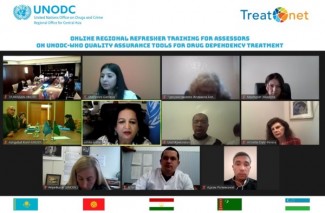
The Regional Mission to Central Asia of the United Nations Office on Drugs and Crime (UNODC) is organizing a regional online training for national assessors experts on the use of UNODC/WHO-designed insights
The five-day regional online training on the skills of UNODC/WHO assessment experts on quality drug treatment has begun on 12 October 2020. The aim of the training is to strengthen institutional support to ensure the successful...
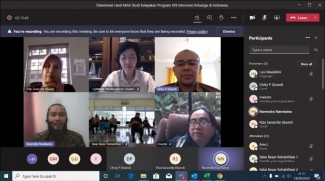
UNODC Indonesia Conducted a Virtual Dissemination of the Final-Results of the Feasibility Study on Newly Developed Module called UN Treatnet Family (TF)
Cannabis is the most commonly used drug among adolescents in Indonesia and at global level. Drugs and other substance use disorders are often associated with co-morbid health disorders such as anxiety, depression and disruptive behaviour...
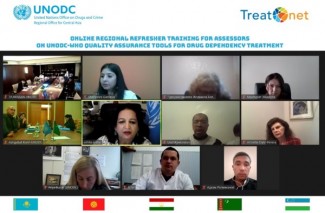
UNODC Regional Office for Central Asia Organizes Online Regional Training for Assessors on UNODC-WHO Quality Assurance Mechanisms/Tools for Drug Use Disorder Treatment
Five-day online regional refresher training for assessors on UNODC-WHO quality assurance (QA) tools for drug dependency treatment launched on 12 October 2020. The purpose of the training is to consolidate the institutional support to ensure...
‘Dignity first’: improving the lives of homeless people who drink and take drugs
Focusing on people with overlapping experiences of homelessness and substance use, this hot topic examines what social policies would look like if they prioritised saving lives and improving lives.
It brings together evidence about needs...
UNODC supports Central Asian countries in piloting quality assurance mechanisms/tools for drug use disorder treatment
Background
In 2019, four Central Asian countries – Kazakhstan, Kyrgyzstan, Tajikistan and Uzbekistan – piloted the implementation of UNODC's quality assurance mechanisms/tools for the treatment of drug use disorders.
The event was held...
Webinar: Introduction to Motivational Interview
ISSUP Argentina invites you to participate in a webinar that will address the Motivational Interview. Concept and advancement in addressing drug-related situations. The webinar will take place on Friday, October 23, 2020 at 10:00 a.m....
A Culture of Prevention
A recent commentary in Prevention Science explored the concept of a culture of prevention and what that means to research and practice.
In this session, Dr. Zili Sloboda opened the discussion by providing a general overview of the issues...