Search
 Public Health
The organised efforts of governments, health systems, and communities to prevent substance-related harms, promote wellbeing, and improve population health outcomes. A public health approach focuses on prevention, early intervention, treatment, recovery support, and harm reduction, while also addressing the social, economic, and environmental factors that influence substance use. It relies on surveillance data, evidence-based interventions, policies, and cross-sector collaboration to reduce the overall burden of substance use disorders and promote healthier communities.



Alcohol and the Environment
The Institute of Alcohol Studies presents Seminar Two in its four-part series on alcohol and sustainability. Seminar Two looks at the impact the production, packaging and distribution of alcohol has on both the local and global environment...
Marketing and Consumption of No and Low Alcohol Drinks in the UK
With NoLo products increasing in popularity among producers and customers, a new report looks at how these drinks are marketed in the UK and how and why consumers drink them.
Using interviews with drinkers and non-drinkers, as well as...
Alcohol-attributable burden of cancer in Argentina
Abstract
Introduction
Alcohol consumption is a risk factor for several types of cancer. Alcohol consumption levels in Argentina are among the highest in the world, and malignant neoplasms are the second cause of death in the country...
Activated Threat Systems: The Intersection of Homelessness, Trauma, and Substance Use
ISSUP are pleased to present the First Event in the Webinar Series on Substance Use and Homelessness:
New Perspectives from Research and Practice.
New Trends in Education and Training Programs in Addictions at the Higher Education and University Levels
BACKGROUND
A broad range of professionals, training opportunities, and regional differences exist in the addiction study field worldwide. This educational variety poses a challenge in proposing a precise classification of study programs at...
AddictologyIssue 4/2021
The Master’s in Drug Dependence at the University of Barcelona: Historical Perspective and Future Challenges
BACKGROUND
The two-year, multidisciplinary Master’s in Drug Dependence (MDD) at the University of Barcelona was created in 1986, after some years of offering shorter seminars. It was a response to the heroin crisis of the 80s and 90s and...
AddictologyIssue 4/2021
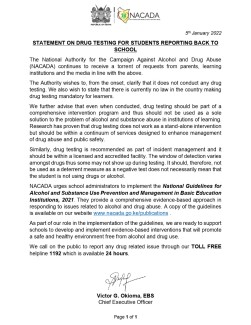
Is students’ drug testing the solution to school riots?
The torching of schools by students has become a regular occurrence in Kenya over the past two decades. This has resulted to destruction of property, disruption of the school calendar and unfortunately loss of innocent lives. Last year...
Alcohol Consumption from a Social and Economic Perspective: A Review Study
BACKGROUND
Alcohol abuse and addiction are a widespread problem that leads to a serious collision and pose a serious threat to individuals as well as to society as a whole. In addition to the health aspect of alcohol consumption, social...
AddictologyIssue 3/2021
Comprehensive Evaluation of the Online Lifelong Education Course Prevention and Treatment of Substance Use Disorders for Physicians in the Czech Republic: Study Protocol
BACKGROUND
The course Prevention of Harmful Substance Use and Addiction Treatment is an integral and mandatory part of postgraduate medical education in the Czech Republic. Its aim is to acquire the necessary knowledge, skills and...
AddictologyIssue 3/2021
Global Family Systems: Psychosocial Resilience during Covid-19
ISSUP UK are pleased to present their Webinar on Global Family Systems: Psychosocial Resilience during COVID-19.
Defining and implementing evidence-based practice: Reading list
What do we mean by evidence? This ISSUP Reading List has useful resources to help you learn more about evidence-based practice.

Normalisation Process Theory
Theories are important tools in the health and social science world. However, it is important to consider how they are formed and how they inform everyday practice.
In this paper, the authors discuss the Normalisation Process Theory...

Professionalization and Strengthening of the Drug Demand Reduction Workforce.
Chaired by Livia Edegger, Deputy Director of the International Society of Substance Use Professionals (ISSUP), the specialist in this panel spoke about the importance of creating and strengthening the workface in drug demand reduction...
New Zealand Announces Smokefree Aotearoa 2025 Action Plan
New Zealand is making history with the launch of a bold Smokefree Action Plan that aims to reduce daily smoking prevalence to less than 5 percent for all population groups across the country by 2025.
The aim of the new plan is to...

Perspectives of healthcare providers, service users, and family members about mental illness stigma in primary care settings: A multi-site qualitative study of seven countries in Africa, Asia, and Europe
Stigma among healthcare providers is a barrier to the effective delivery of mental health services in primary care. Few studies have been conducted in primary care settings comparing the attitudes of healthcare providers and experiences of...
Strategies Adopted by Addiction Facilities during the Coronavirus Pandemic to Support Treatment for Individuals in Recovery or Struggling with a Substance Use Disorder: A Scoping Review
This review aimed to identify and synthesize strategies and actions adopted by addiction facilities to support and maintain treatment during the coronavirus disease 2019 (COVID-19) pandemic.
LxAddictions22: Global addictions
Lisbon Addictions is a multidisciplinary conference that provides a forum for networking across addictions.
Submission of abstracts
Potential contributors are invited to submit abstracts for the following main areas/thematic tracks:
- Gl...

Two new tobacco cessation medicines added to the WHO essential medicines list
Every two years, the World Health Organization (WHO) publishes its Model List of Essential Medicines (EML), a collection of medicines considered essential by WHO experts.
The purpose of the list is to guide national authorities on the type...

Alcohol energy (calorie) labelling: Evidence, public support, alternatives, and wider labelling considerations
This briefing synthesises existing evidence on alcohol energy (calorie) labelling, spanning the past five years (2016-2021).
This briefing covers reviews in the academic literature about the impact of alcohol energy labelling, studies and...