Psychoactive Substances

Psychoactive substances are natural or synthetic substances that act on the central nervous system and alter mental processes such as mood, perception, cognition, consciousness, and behaviour. These substances may be legally prescribed medications (e.g., pain medications or sedatives), legally available substances such as alcohol or caffeine, or controlled or illicit drugs. Psychoactive substances can be used for medical, social, cultural, or recreational purposes, but some carry risks of misuse, dependence, and health or social harms when used in harmful ways. 

Role of Addiction and Stress Neurobiology on Food Intake and Obesity

Scientific article
 - 
Abstract The US remains at the forefront of a global obesity epidemic with a significant negative impact on public health. While it is well known that a balance between energy intake and expenditure is homeostatically regulated to control...

The Health and Social Effects of Nonmedical Cannabis Use

Book
Foreword Cannabis is globally the most commonly used psychoactive substance under international control. In 2013, an estimated 181.8 million people aged 15-64 years used cannabis for nonmedical purposes globally (UNODC, 2015). There is an...

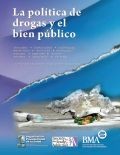
Drug policy and the public good

Book
Drug use has a significant impact on health published by illness, disability, and social problems, and the decision makers are increasingly interested in the development of evidence-based drug policy. Is fundamentanl to strengthen ties...

Substance Use among a Sample of Healthcare Workers in Kenya

Scientific article
 - 
ABSTRACT This study describes reported substance use among Kenyan healthcare workers (HCWs), as it has implications for HCWs’ health, productivity, and their ability and likelihood to intervene on substance use. The Alcohol Smoking and...

The Role of Adenosine Receptors in Psychostimulant Addiction

Scientific article
 - 
Adenosine receptors (AR) are a family of G-protein coupled receptors, comprised of four members, named A1, A2A, A2B, and A3 receptors, found widely distributed in almost all human body tissues and organs. To date, they are known to...

Misuse of Novel Synthetic Opioids: A Deadly New Trend

Scientific article
ABSTRACT Novel synthetic opioids (NSOs) include various analogs of fentanyl and newly emerging non-fentanyl compounds. Together with illicitly manufactured fentanyl (IMF), these drugs have caused a recent spike in overdose deaths, whereas...