Psychoactive substances are natural or synthetic substances that act on the central nervous system and alter mental processes such as mood, perception, cognition, consciousness, and behaviour. These substances may be legally prescribed medications (e.g., pain medications or sedatives), legally available substances such as alcohol or caffeine, or controlled or illicit drugs. Psychoactive substances can be used for medical, social, cultural, or recreational purposes, but some carry risks of misuse, dependence, and health or social harms when used in harmful ways.
Psychoactive Substances
International Consensus Statement for the Screening, Diagnosis, and Treatment of Adolescents with Concurrent Attention-Deficit/Hyperactivity Disorder and Substance Use Disorder
This international consensus statement can be used by clinicians and patients together in a shared decision-making process to select the best interventions and to reach optimal outcomes in adolescent patients with concurrent ADHD and SUD.
Cruz Martín del Campo, S., León Parra, B. and Angulo Rosas, E.A. (2019). What you need to know about drugs. Mexico: Youth Integration Centers.
In 2013, under the convocation of the National Office of Drugs and Crime (UNODC), a group of experts in reducing the demand for drugs, several government institutions and civil society organizations met to develop the "Communicator's Guide...
Perception of quality of life and health status in outpatient treatment for problematic use of psychoactive substances
This study indemnifies the perception of quality of life and health status in outpatient treatment for problematic consumption of psychoactive substances, in an organization of the Civil Society of the Autonomous City of Buenos Aires. Two...
Drink in moderation. A non-preventive message
Drink in moderation. A healthy, well-meaning and responsible advice, transmitted by the alcoholic beverage industry in all its advertisements, aimed at preventing the problems of excessive alcohol consumption. Right? I'm not so sure. The...
Eye tracking of smoking-related stimuli in tobacco use disorder: A proof-of-concept study combining attention bias modification with alpha-transcranial alternating current stimulation
Abstract Background Tobacco use disorder (TUD) is characterized by the presence of an attentional bias (AB) towards smoking-related stimuli. We investigated whether combining an AB modification paradigm (ABM) with transcranial alternating...
Illicit Drug Use and the Genetic Overlap with Cannabis Use
Abstract Background The use of illicit substances is correlated, meaning that individuals who use one illicit substance are more likely to also use another illicit substance. This association could (partly) be explained by overlapping...
Webinar: ISSUP Ukraine - Clinical Aspects of Substance Use Disorders
On Thursday, July 2, 2020 ISSUP Ukraine presented a webinar on Clinical Aspects of Substance Use Disorders. The webinar was presented in Ukrainian and Russian.
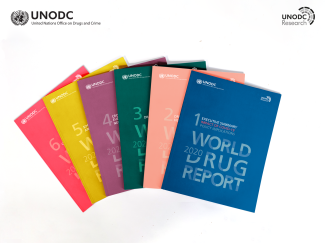
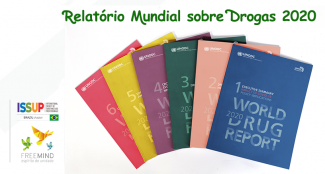
World Drug Report 2020
Presented in six separate booklets, the World Drug Report 2020 provides a wealth of information and analysis to support the international community in implementing operational recommendations on a number of commitments made by Member States...
World Drug Report 2020
Global drug consumption increases, while COVID-19 impacts markets, according to the World Drug Report 2020, released on June 25, 2020 by the United Nations Office on Drugs and Crime (UNODC). The Report shows that around 269 million people...
Better Knowledge for Better Care: Changing Substance Use Treatment and Prevention Narratives in Nigeria
International Day against Drug Abuse and Illicit Trafficking Better Knowledge for Better Care Changing Substance Use Treatment and Prevention Narratives in Nigeria The United Nations International Day against Drug Abuse and Illicit...