Psychoactive substances are natural or synthetic substances that act on the central nervous system and alter mental processes such as mood, perception, cognition, consciousness, and behaviour. These substances may be legally prescribed medications (e.g., pain medications or sedatives), legally available substances such as alcohol or caffeine, or controlled or illicit drugs. Psychoactive substances can be used for medical, social, cultural, or recreational purposes, but some carry risks of misuse, dependence, and health or social harms when used in harmful ways.
Psychoactive Substances
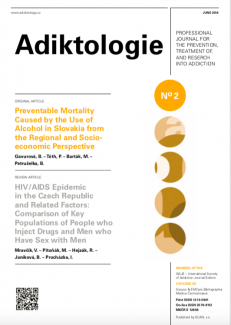
Adiktologie Journal
Adiktologie is an international journal devoted to publishing peer-reviewed interdisciplinary and transdisciplinary scientific reports on psychoactive substance use, behavioural addictions and related issues.
Magnitude of Substance Use in India
The National Survey assesses the extent and patterns of substance use in India.
Quality Measurers of Therapeutic Communities for Substance Dependence: An International Collaborative Study Survey in Latin America
Abstract Background In Latin America, substance related disorders are highly prevalent and one of the treatment strategies is the Therapeutic Communities (TCs), however, in Latin America there is scarce data about this treatment strategies...
Addiction Journal Podcast - January 2019
The Addiction Journal Podcast takes the listener through the content of the January edition of the journal, selects and discusses some of the highlights and includes interviews, which have been conducted with some of the authors.
Conditional Probabilities of Substance Use Disorders and Associated Risk Factors
Highlights Pre-existing mental disorders increases the risk of developing SUD. Prior SUD increases the risk of transitioning from use to use disorder. Highest rates of transition to SUD occurred among stimulant and opioid users. Mood and...
Dopamine Neurons Projecting to Medial Shell of the Nucleus Accumbens Drive Heroin Reinforcement
Abstract The dopamine (DA) hypothesis posits the increase of mesolimbic dopamine levels as a defining commonality of addictive drugs, initially causing reinforcement, eventually leading to compulsive consumption. While much experimental...
Cobertura jornalística sobre drogas: distorções e potencialidades na prevenção
Capítulo 11 do Livro: Ações integradas sobre drogas: prevenção, abordagens e políticas públicas. Ed. UFJF, 2013. The content discussed highlights the influence of the media in the process of health promotion related to alcohol and other...
Nonmedical Use of Stimulants Is Associated With Riskier Sexual Practices and Other Forms of Impulsivity
Abstract: Background: This study sought to examine the occurrence of the nonmedical use of prescription stimulants (amphetamines and methylphenidate) in a university sample and their associated physical and mental health correlates...
Universal Prevention Curriculum (UPC) Preparation Workshop in Islamabad, Pakistan
The Ministry of Narcotics Control (MNC) – Government of Pakistan in collaboration with the United Nations Office on Drugs and Crime (UNODC) organized a preparation workshop on the Universal Prevention Curriculum (UPC) on psychoactive and...
SPIRITUALITY/RELIGIOSITY AS A PROTECTIVE FACTOR AGAINST THE USE OF PSYCHOACTIVE SUBSTANCES IN ADOLESCENCE
Review article published in the Journal of Debates in Psychiatry - Jul/Aug 2017 Abstract Objective: To analyze the impact of spirituality and/or religiousness on the use of psychoactive substances in the adolescent population in both...